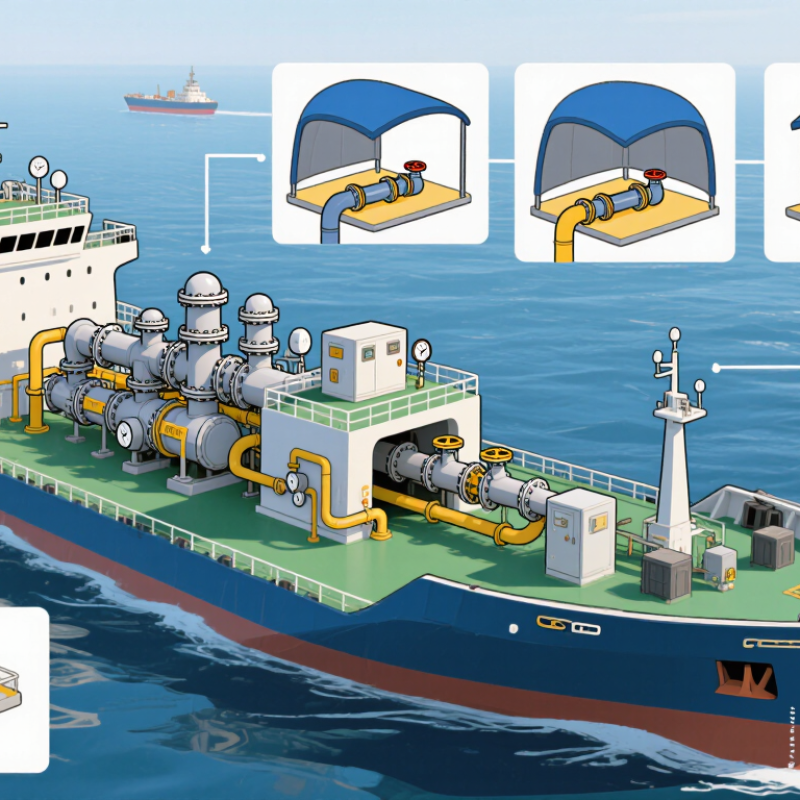
| Pump skid definition | A pre-assembled base frame carrying LNG pumps and associated piping, valves, drives, instruments, and connections. | Provides a packaged means of transferring LNG between storage and the bunkering connection or receiving vessel. | Confirm package boundaries, tie-in points, lifting arrangements, maintenance access, and interfaces with the vessel’s systems. |
| Pump technology | Cryogenic centrifugal pumps are commonly used. Depending on the arrangement, pumps may be submerged in a tank or installed as externally mounted units. | Creates the pressure and flow needed to move LNG through the transfer line. | Review the pump curve, operating range, materials, allowable operating conditions, and suitability for the planned installation. |
| Cryogenic service | LNG is typically stored and transferred near its boiling temperature, approximately −162°C at atmospheric pressure. Actual conditions depend on composition and pressure. | Requires equipment and piping designed to remain functional at low temperatures and to accommodate thermal contraction. | Check design temperature, cooldown and warm-up procedures, insulation or cold-box arrangements, and thermal-stress provisions. |
| Flow and pressure duty | Required flow rate and discharge pressure are project-specific; they depend on transfer-line size, vessel layout, receiving-system pressure, and bunkering duration. | Determines the pump size, motor rating, number of pumps, and expected transfer performance. | Request the guaranteed duty point, full pump curve, minimum and maximum operating flow, and performance at relevant LNG conditions. |
| Pump arrangement | Single or multiple pumps may be specified. Duty/standby arrangements are selected according to availability, capacity, and maintenance requirements. | Provides the required transfer capacity and, where specified, operational redundancy. | Confirm operating philosophy, standby changeover method, isolation provisions, and whether the stated capacity is per pump or for the complete package. |
| Materials and piping | Cryogenic-compatible materials are selected for the specified temperature, pressure, fluid, and applicable design code. Stainless steels and other qualified low-temperature materials may be used. | Maintains structural integrity and leak-tight performance during cold service and temperature changes. | Review material specifications, traceability, welding procedures, inspection records, and compatibility with the project’s LNG composition and design conditions. |
| Motor, seals, and leakage control | Drive and sealing arrangements vary with pump type. Cryogenic pump designs may use submerged motors or other configurations suited to low-temperature service. | Drives the pump while limiting leakage and supporting safe operation in the designated hazardous area. | Verify motor protection, hazardous-area suitability, seal or containment design, temperature monitoring, and maintenance requirements. |
| Instrumentation and metering | Instrumentation may include pressure and temperature measurement, level or vibration monitoring, flow measurement, and equipment-status signals. | Supports operating control, performance monitoring, transfer measurement, and alarm handling. | Confirm instrument ranges, cryogenic suitability, calibration requirements, signal interfaces, and whether custody-transfer metering is included or supplied separately. |
| Safety and emergency shutdown | Typical project provisions may include emergency shutdown interfaces, isolation valves, alarms, and connections to the vessel’s safety system. | Helps stop or isolate transfer equipment when an abnormal condition or emergency is detected. | Review cause-and-effect documentation, shutdown interfaces, fail-safe positions, hazardous-area design, and integration with transfer-line emergency release arrangements where applicable. |
| Skid structure and marine integration | The frame, supports, and equipment layout are designed for the specified deck loads, movement, environmental conditions, and maintenance envelope. | Enables secure installation and operation on a floating facility while providing access for inspection and servicing. | Check structural calculations, loads and acceleration assumptions, corrosion protection, lifting points, footprint, and vessel-specific connection details. |
| Testing and documentation | Project documentation commonly includes drawings, data sheets, inspection and test records, operating instructions, and equipment certificates as required by the contract. | Supports design review, installation, commissioning, operation, and future maintenance. | Agree on factory testing scope, performance-test conditions, inspection hold points, document language, and applicable codes and jurisdictional requirements. |