China Best Run Capacitor Suppliers for Global Buyers?
China Best Run Capacitor Suppliers for Global Buyers?
Choosing a dependable Run Capacitor supplier in China requires more than comparing prices. Global buyers must examine electrical ratings, production controls, testing methods, and after-sales support. A suitable supplier should provide stable capacitance, low losses, strong insulation, and reliable performance under continuous motor operation.
Electrical engineer and motor researcher Dr. Austin Hughes has stated, “A motor capacitor must be selected as part of the motor system, not as an isolated component.” This principle matters in practical sourcing. A capacitor may look correct on paper, yet fail when exposed to heat, vibration, voltage fluctuation, or long operating hours. Buyers should check whether the supplier tests voltage endurance, capacitance tolerance, terminal strength, and thermal performance.
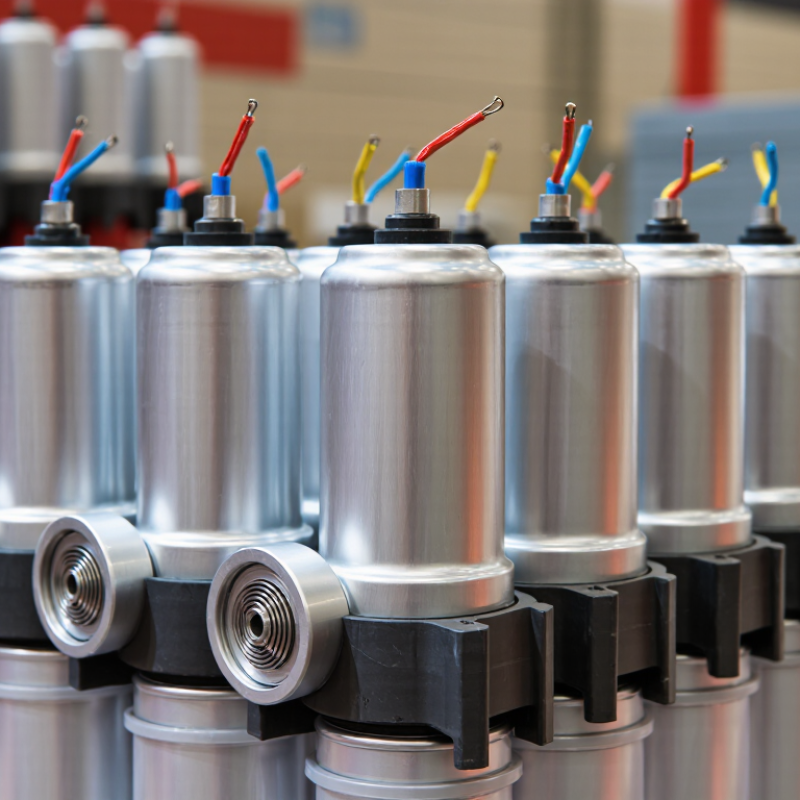
Details often reveal the real manufacturing standard. Look for traceable raw materials, clean winding lines, sealed aluminum cases, clear markings, and documented batch inspections. Ask for test reports before placing a large order. Ask again when specifications change.
Price still matters. It should not lead the decision.
Experienced importers also review factory capacity, export experience, communication speed, packaging quality, and warranty procedures. Some suppliers present impressive certificates but provide weak technical answers. That is a warning sign. Certifications require verification, and product claims require evidence.
This guide examines China’s leading Run Capacitor suppliers from a buyer’s perspective. It considers product consistency, customization, compliance documentation, delivery reliability, and technical competence. No supplier is perfect. Even a strong factory may have limitations, and buyers should identify them before signing a contract.
What Makes a Run Capacitor Supplier Stand Out in China
A run capacitor supplier stands out through consistent engineering, not attractive catalogs. In practice, buyers should examine capacitance tolerance, rated voltage, temperature range, and expected service life. A capable factory explains these figures clearly. It also connects them to motor size, operating cycles, and ambient heat. That practical guidance shows real experience.
Quality appears in small details. The supplier should control film thickness, winding tension, sealing, and terminal strength. Each production batch needs capacitance, leakage, endurance, and safety testing. Clear records make problems easier to trace. Good suppliers provide samples before mass production. They also confirm drawings, labels, packaging, and delivery terms in writing. Short answers are not always useful. Detailed answers build confidence.
Customization matters too. A dependable supplier can adjust terminals, housing dimensions, lead length, and mounting options. However, flexibility should not weaken testing discipline. Ask how design changes affect heat resistance and lifetime. No supplier is perfect. Some factories communicate well but respond slowly during technical reviews. Others offer low prices but provide weak inspection evidence. That is where buyers must look beyond quotations. A factory visit, video audit, or independent test can reveal more than a sales promise. Small inconsistencies may become costly in large motor orders. Reliability grows from repeatable processes, honest limits, and evidence that can be checked.
How to Evaluate Chinese Run Capacitor Manufacturers
When evaluating Chinese run capacitor manufacturers, look beyond catalog photos and low quotations. Ask for factory registration, quality certificates, and product test records. Verify whether certificates match the exact capacitor series. Check rated voltage, capacitance tolerance, operating temperature, and expected service life. A reliable manufacturer explains these figures clearly. Vague answers deserve caution.
Request samples from different production batches. Test capacitance, insulation resistance, leakage current, and terminal strength. Use an independent laboratory when the application involves continuous motor operation. Inspect the production line, winding process, sealing method, and warehouse conditions. Good factories control moisture and dust. They also maintain traceability from film material to finished units. In practical sourcing work, response speed often reveals technical ability. Still, fast replies are not proof. Some suppliers provide impressive samples but struggle with stable mass production. That risk needs checking.
Tips: Compare at least three suppliers using the same specification sheet. Request aging-test data and recent inspection reports. Confirm packaging before shipment. Weak cartons can damage terminals during long transport. Ask how rejected units are recorded and corrected. A supplier willing to discuss failures may be more dependable than one claiming perfect results. Keep written records of every change, because small specification differences can affect motor performance and compliance in your market.
China Best Run Capacitor Suppliers for Global Buyers: How to Evaluate Chinese Run Capacitor Manufacturers
Use this buyer-side benchmark to compare Chinese run capacitor manufacturers without relying on brand reputation alone. The weighting reflects practical procurement priorities such as IEC 60252-1 compliance, service life, electrical margins, capacitance tolerance, traceability, and supply consistency.
The percentages represent evaluation weights, not the performance of any specific company. Buyers should verify certificates, test reports, production samples, warranty terms, and batch consistency before placing an order.
Quality, Safety, and Certification Standards to Check
China Best Run Capacitor Suppliers for Global Buyers?
A reliable run capacitor supplier should provide more than attractive pricing. Check the rated capacitance, voltage, frequency, operating temperature, and loss factor. IEC 60252-1 specifies performance and safety requirements for motor capacitors, including endurance testing. Ask for complete test reports, not only a scanned certificate. The report should identify the sample, test conditions, equipment, and laboratory.
Safety deserves close attention. Look for pressure-interrupt devices, flame-retardant cases, secure terminals, and clear polarity or wiring marks where applicable. The International Energy Agency’s Energy Efficiency 2023 report recorded a global energy-intensity improvement of about 2.2% in 2022. Efficient motors help, but unstable capacitance can reduce performance and increase heat. Small component failures may create expensive field problems.
Certification checks should match the destination market. Confirm whether the product needs IEC, ISO-based factory controls, or local electrical approvals. Request batch traceability, incoming-film inspection records, and accelerated life-test results. I would also compare samples from different production lots. One perfect sample proves little. A 2024 industry report from MarketsandMarkets projects continued growth in the motor and capacitor sectors, which may encourage rushed production. That is a risk worth questioning. Supplier audits, realistic warranty terms, and documented corrective actions reveal more than polished brochures.
Steps for Sourcing and Comparing Chinese Suppliers
China Best Run Capacitor Suppliers for Global Buyers?
Steps for Sourcing and Comparing Chinese Suppliers
Begin with a clear technical sheet. State capacitance, rated voltage, frequency, tolerance, temperature range, case size, terminal style, and expected service life. Do not guess. A supplier should confirm each value in writing. Ask for routine test records, material details, and applicable safety certifications. Check whether documents match the actual production model, not just a general product series.
Request samples from at least three Chinese suppliers. Test capacitance, insulation resistance, temperature rise, and terminal strength under your operating conditions. A clean sample proves little. Ask about production consistency. Review factory photos, quality-control stages, traceability, and failure-handling procedures. A video tour helps, but an independent inspection is more reliable. Small details matter, such as sealed packaging, lot labels, and moisture protection during shipment.
Compare more than unit price. Include tooling, sample fees, minimum order quantity, payment terms, delivery time, replacement policy, and export packing. Ask how the supplier handles a failed batch. A written answer reveals maturity. I have learned that a polished catalog can still hide weak process control. Some suppliers respond slowly but produce consistent goods; others promise everything too quickly. That difference needs checking. Keep trial orders modest, record test results, and revise the specification when real installation feedback exposes a missed detail.
China Best Run Capacitor Suppliers for Global Buyers? - Steps for Sourcing and Comparing Chinese Suppliers
| Comparison Dimension | Supplier Profile A | Supplier Profile B | Supplier Profile C | Supplier Profile D | Supplier Profile E |
| Typical Product Focus | Motor-run capacitors for HVAC and refrigeration | Cylindrical polypropylene motor capacitors | Heavy-duty capacitors for pumps and compressors | Compact capacitors for household appliances | Custom terminal and mounting configurations |
| Common Capacitance Range | 2–80 µF | 1.5–70 µF | 5–100 µF | 1–50 µF | 2–100 µF, subject to design |
| Typical Rated Voltage | 370–450 VAC | 250–500 VAC | 370–500 VAC | 250–450 VAC | Application-specific |
| Capacitance Tolerance | Typically ±5% | Typically ±5% | Typically ±5% | Typically ±5% to ±10% | Defined in approved specification |
| Applicable Safety Standard | IEC 60252-1 commonly available | IEC 60252-1 commonly available | IEC 60252-1; higher-duty options available | IEC 60252-1 for qualifying models | Standard selected according to destination market |
| Quality Documentation to Request | Datasheet, routine-test report, material declaration | Datasheet, batch record, incoming-material records | Datasheet, endurance data, inspection plan | Datasheet, sample inspection report, RoHS declaration | Approved drawing, change-control procedure, test plan |
| Typical Sample Lead Time | 5–10 working days | 7–12 working days | 7–15 working days | 5–10 working days | 10–20 working days for customized samples |
| Typical Mass-Production Lead Time | 20–35 working days | 25–40 working days | 25–45 working days | 20–35 working days | 30–50 working days after drawing approval |
| Common MOQ Range | 100–500 pieces | 500–1,000 pieces | 300–1,000 pieces | 500–2,000 pieces | 1,000 pieces or quotation-based |
| Best Fit for Global Buyers | Standard HVAC replacement programs | Regular-volume distributors | Demanding continuous-duty applications | Cost-sensitive appliance programs | OEM projects requiring customization |
| Recommended Sourcing Step | Verify electrical ratings and thermal performance | Compare material traceability and batch consistency | Review endurance testing and failure-rate data | Check sample dimensions and terminal reliability | Approve drawings, samples, and engineering changes |
Benchmark figures are typical sourcing ranges for Chinese motor-run capacitor production and should be confirmed against the supplier’s current datasheet, test reports, quotation, and approved sample before purchase.