How to Choose the Best Battery Connector for Your Needs?
Choosing the right Battery Connector is crucial for optimal performance in any application. Battery connectors serve as the vital link between batteries and devices, ensuring efficient power transfer. The right choice can make all the difference in reliability and safety.
Consider the variety of battery connector types available. Each type has specific features tailored for different needs. It's important to assess the voltage, current ratings, and environmental factors. For instance, a waterproof connector might be necessary for outdoor applications. Meanwhile, compact connectors can save space in smaller devices.
Balancing cost against quality is often challenging. Selecting a lower-priced connector may lead to reliability issues long-term. On the other hand, high-end connectors might not always be essential. Therefore, understanding your requirements is key. Only then can you confidently choose the best battery connector for your needs.
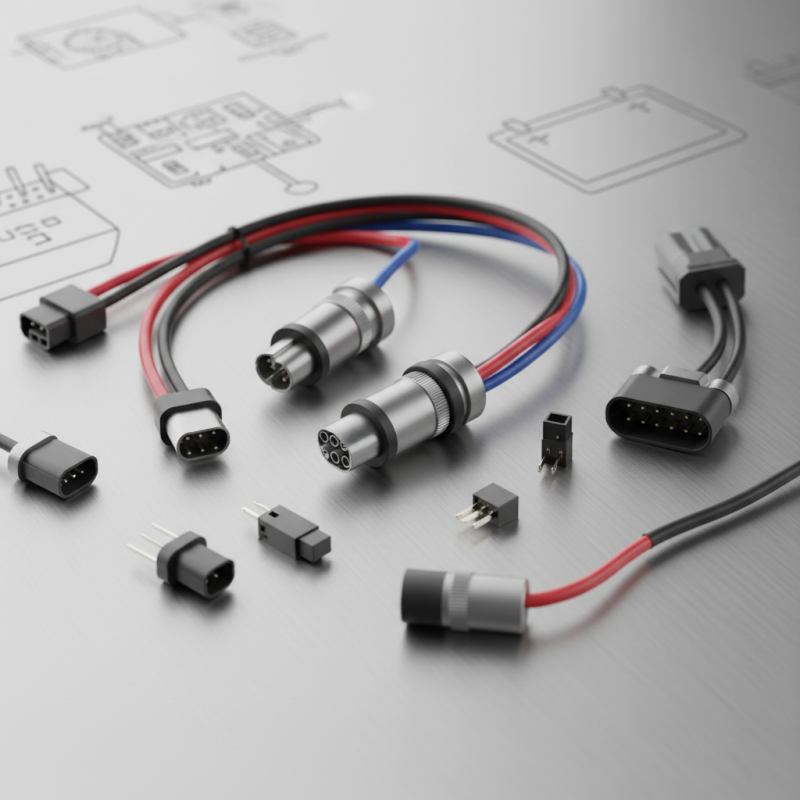
Identify Your Power Requirements for Battery Connectors
When choosing a battery connector, understanding your power requirements is crucial. Different applications demand varying power levels, which dictates the type of connector you need. For example, electric vehicles typically require connectors capable of handling 400A or more, while smaller devices may need only 5A. According to recent industry reports, connectors that exceed their rated capacity can overheat, causing potential failures.
Additionally, voltage levels play a vital role. Connectors must withstand the maximum voltage in your application for safety and reliability. A study revealed that connectors rated for at least 600 volts are essential for industrial applications. This ensures efficient power transfer without risking damage. It’s not uncommon to see specifications overlooked, resulting in increased maintenance costs.
Connector size is another aspect influenced by power needs. Larger connectors can carry higher currents but may limit installation space. Balancing size with capacity can be challenging. Research shows that improper sizing leads to connection failures in 30% of cases. Understanding your unique power requirements is key to choosing the right battery connector. It can significantly enhance performance and durability in your application.
Power Requirements for Battery Connectors
Understand Different Types of Battery Connectors and Their Uses
Choosing the right battery connector is crucial for various applications. Understanding the different types can help you make an informed decision. Common types include spade connectors, bullet connectors, and Anderson connectors. Each type serves unique purposes and has its advantages.
Spade connectors are ideal for quick connections and disconnections. They are used often in automotive applications. Bullet connectors are favored for their secure connections and ease of use. You will find them in model kits and RC cars. Anderson connectors provide a robust solution for high-current applications. They excel in solar power systems and electric vehicles.
It is important to assess your specific needs before selecting a connector. Consider factors like the current requirements and environmental conditions. Researching the connectors’ specifications can avoid potential issues. Sometimes, users overlook the impact of wire gauge and insulation types. This can lead to unreliable performance. Always ensure that the chosen connector matches your application requirements.
Evaluate Connector Compatibility with Battery Types and Devices
Choosing the right battery connector is crucial for any electronic project. Compatibility between your connector, battery type, and connected devices can greatly affect performance. Different batteries, such as lithium-ion, lead-acid, or nickel-metal hydride, require specific connectors. Understanding these nuances helps ensure safety and efficiency.
When evaluating connectors, consider the amperage and voltage ratings. A connector with a higher amperage rating may be necessary for devices drawing significant current. Additionally, the voltage rating should match your battery type. Mismatched ratings can lead to overheating or failure of the connector. For instance, using a low-rated connector with a high voltage battery could result in dangerous sparks.
Keep in mind that connectors come in various styles, like blade, socket, or screw terminals. Each type has its advantages and drawbacks. Blade connectors are easy to use but may not hold up under heavy loads. Screw terminals provide a robust connection but require tools for installation. Reflecting on these aspects will guide you in selecting the best connector for your project. Always prioritize quality and reliability in your choices.
Consider Environmental Factors Affecting Connector Performance
When choosing a battery connector, environmental factors are crucial for optimal performance. Temperature fluctuations, humidity, and exposure to chemicals can significantly affect connector integrity. For example, connectors used in outdoor applications may face UV radiation, which degrades insulation over time. Reports indicate that connectors exposed to extreme temperatures can lose conductivity, reducing efficiency by over 30%.
Consider the specific environment in which your connectors will operate. For humid conditions, opt for moisture-resistant materials. In contrast, harsh chemical environments require connectors with enhanced chemical resistance. According to industry research, choosing the right material can extend the lifespan of your connectors by up to 50%.
Tips: Always review technical specifications for current ratings and environmental ratings. Keep in mind that a mismatch can lead to failures. When in doubt, consult with an expert to ensure your choice aligns with your operational needs. Ensuring the right fit can save both time and money in the long run.
Assess Safety Features and Standards in Battery Connectors
When selecting a battery connector, safety features are paramount. High-quality connectors must meet rigorous safety standards. Look for connectors that are certified by recognized organizations. They should have features that protect against short circuits and overheating. These can include fuses or thermal cut-offs. Consider connectors designed for specific applications. These may have additional safety features tailored to the usage environment.
Material plays a crucial role in connector safety. Ensure they are made from durable, non-conductive materials. This helps mitigate risks like corrosion and damage. Pay attention to how a connector is constructed. A poorly designed connector can lead to failures or safety hazards. Also, review user feedback on safety experiences. Anecdotes can reveal potential issues not highlighted in specifications.
Testing is another critical aspect. Ideally, connectors should undergo rigorous testing. Look for data on stress tests, resistance to environmental impacts, and durability. If information is lacking, it may indicate subpar safety standards. Take your time during the selection process. Fast decisions can overlook important safety considerations, leading to significant risks.