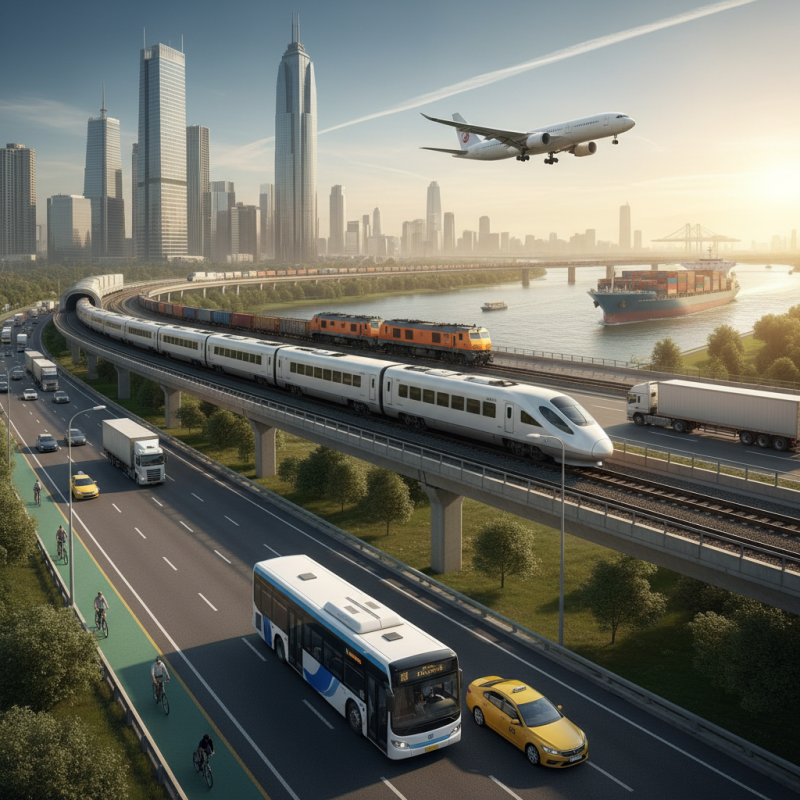
What are the Different Types of Transport Vehicles?
Transport vehicles play a crucial role in our daily lives. They are the backbone of global trade and personal mobility. From bicycles to large cargo ships, these vehicles come in various forms. Each type has unique features that meet different needs.
In urban settings, we often see buses and taxis. They connect people to workplaces and services. In contrast, long-distance journeys rely on trains and airplanes. These are essential for traveling hundreds of miles quickly. Yet, not all transport vehicles are efficient. Some contribute to pollution and traffic congestion.
Different transport vehicles serve specific purposes. For instance, freight trucks specialize in transporting goods. While they are vital for commerce, their increasing number raises concerns. It's important to reflect on how we choose and use these vehicles. Are they the best option for our environment and society?
Types of Transport Vehicles: An Overview
Transport vehicles play a crucial role in our daily lives. They are essential for moving goods and people from one place to another. There are several types of transport vehicles, each serving different purposes. According to the International Organization of Motor Vehicle Manufacturers, more than 1.4 billion vehicles are in use worldwide. This number reflects the growing demand for efficient transportation.
Road vehicles are among the most common types. Cars, buses, and trucks dominate urban areas. In the United States, trucks account for nearly 70% of all freight transported. Additionally, rail transport remains a viable option, especially for bulk goods. Although trains have a lower carbon footprint, their usage often depends on geographical conditions.
Water transport includes ships and boats, crucial for international trade. Approximately 90% of global trade is carried by sea. However, this mode faces challenges such as environmental regulations and piracy. Air transport, while the fastest, is also the most carbon-intensive. It is vital for urgent deliveries but creates significant environmental concerns that need addressing. Reflecting on these various transport types reveals both their advantages and areas requiring improvement.
What are the Different Types of Transport Vehicles?
This chart presents an overview of the different types of transport vehicles and their prevalence in various categories. The data illustrates the number of vehicles in each category, providing insight into common modes of transportation used today.
Land Transport Vehicles: Categories and Examples
Land transport vehicles come in various forms, each designed for specific needs. Personal vehicles, like cars, offer flexibility. They allow individuals to travel at their own pace. Bicycles are eco-friendly and promote health, yet they limit travel distance and speed.
Public vehicles include buses and trains. Buses can carry many passengers but often face traffic delays. Trains, on the other hand, provide a faster means for longer journeys. Nonetheless, they require significant infrastructure and can be affected by weather conditions.
Heavy vehicles, such as trucks, support cargo transport. They are essential for logistics but can be challenging to maneuver in tight spaces. Agricultural vehicles like tractors are crucial for farming, yet their use can lead to soil compaction. Each type of land transport vehicle has its advantages and drawbacks. Evaluating these can lead to better transport solutions.
Water Transport Vehicles: Types and Functions
Water transport plays a crucial role in global trade and travel. Various vehicle types serve specific needs, making water transport versatile and efficient. For instance, cargo ships are vital for freight. In 2020, global seaborne trade reached 11 billion tons, as reported by the International Maritime Organization (IMO). Bulk carriers transport commodities like coal and grains. These vessels can carry thousands of tons at a time, showcasing their efficiency.
Passenger ferries are another significant class of water transport. They enable quick and safe travel across water bodies. A report from the World Maritime University highlighted that ferries can reduce road congestion in urban areas. Their ability to move people efficiently is unmatched in many regions, especially in island nations.
However, not all water transport vehicles are environmentally friendly. Many vessels still rely on fossil fuels. Emissions from shipping are a growing concern, contributing to climate change. Innovation is needed. Developing cleaner propulsion systems could significantly reduce the environmental impact of these vehicles. The future of water transport must balance efficiency and sustainability.
Air Transport Vehicles: Exploring Different Categories
Air transport vehicles play a vital role in global connectivity. They are key for long distances and quick deliveries. Different categories of air transport vehicles serve various needs. Passenger planes are the most common type. They carry people quickly between cities. Cargo planes, on the other hand, transport goods and materials.
Helicopters provide another unique air transport option. They can land in smaller areas, offering versatility. This makes them ideal for medical emergencies or surveying hard-to-reach places. Drones have also emerged as a new category. They are used for deliveries and surveillance, changing the landscape of air transport.
However, this evolution raises challenges. The environmental impact of increased air traffic is concerning. Noise pollution affects communities near airports. Regulatory issues also complicate the introduction of new technologies like drones. Continuous reflection on these aspects is crucial for the future of air transport.
What are the Different Types of Transport Vehicles? - Air Transport Vehicles: Exploring Different Categories
| Vehicle Type | Description | Capacity (Passengers) | Typical Range (Miles) |
| Commercial Airliner | Large aircraft used for transporting passengers over long distances. | 150 - 600 | 3,000 - 8,000 |
| Cargo Plane | Aircraft designed specifically for transporting goods and freight. | N/A | 1,500 - 6,000 |
| Private Jet | Luxury aircraft used for charter or private travel. | 4 - 20 | 2,000 - 5,000 |
| Helicopter | Rotary-wing aircraft used for short-distance travel and emergency services. | 1 - 6 | 200 - 500 |
| Glider | Aircraft designed for unpowered flight, relying on rising air currents. | 1 - 2 | Up to 600 |
Specialized Transport Vehicles: Purpose and Design
Specialized transport vehicles play a crucial role in various industries. They are designed for specific tasks, enhancing efficiency and safety. For instance, refrigerated trucks are essential in the food industry. According to the Transportation Research Board, around 10% of food waste occurs due to temperature abuse during transportation. This emphasizes the need for specialized vehicles that maintain optimal conditions.
Another example is flatbed trucks, commonly used in construction. These vehicles allow for transporting bulky goods like steel beams or heavy machinery. A report from the American Association of State Highway and Transportation Officials notes that proper loading practices can reduce the risk of accidents by 30%. It's vital for operators to understand their vehicle's design limits.
Tips: Always check load capacities. Proper weight distribution is key. Invest in regular maintenance checks to ensure vehicle reliability. Specialized transport vehicles are not just tools; they require careful handling. Making sure drivers are trained correctly is essential. Inadequate training can lead to costly mistakes. Always strive for improvement in vehicle handling techniques.