
Choosing the right Recessed Downlight involves more than comparing prices, wattage, or attractive product photographs. A dependable fixture must deliver controlled brightness, comfortable glare levels, accurate color, and stable performance over time. Its trim, beam angle, housing depth, and driver quality affect every visible surface beneath it. A narrow beam can sharpen artwork, while a wider beam may soften a dining room or corridor.
Lighting educator Randall Whitehead captures the human purpose clearly: “Good lighting is not just about seeing; it is about creating an atmosphere.” This principle matters when reviewing the top Recessed Downlight manufacturers and suppliers. The strongest companies combine optical engineering with practical installation knowledge. They provide clear photometric data, reliable warranties, compatible dimming options, and tested thermal performance. Those details are easy to overlook.
Yet no ranking is perfect. A premium brand may perform beautifully in a showroom but disappoint when installers face shallow ceilings or difficult wiring. A lower-cost supplier may offer impressive specifications, but long-term consistency can remain uncertain. That is why this guide examines more than brand reputation. It considers product construction, certification claims, energy efficiency, color quality, customization, delivery support, and real project suitability. The comparison is intended to help architects, contractors, distributors, and property owners make informed decisions. Some conclusions may change as LED technology evolves. That is worth admitting. Good lighting evaluation requires evidence, field experience, and occasional reconsideration.
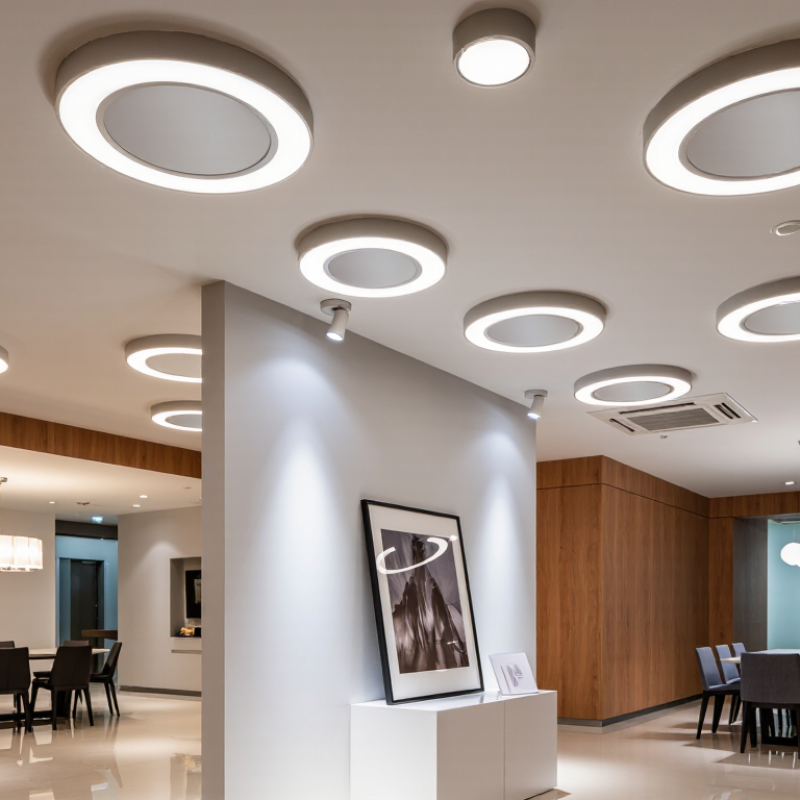
When comparing recessed downlight manufacturers and suppliers, begin with measurable lighting fundamentals. Wattage indicates energy use, not brightness alone. A quality 10W downlight may produce more useful light than an inefficient 15W model. Check delivered lumens, driver efficiency, and heat management. In real projects, ceiling height and surface color change the result.
Beam angle controls how light spreads across a room. A 24-degree beam creates focused pools on artwork or retail displays. A 36-degree beam often suits kitchen counters and work areas. Wider 60-degree optics provide softer coverage in corridors and bedrooms.
Too much overlap can create glare. Too little can leave visible dark patches.
Color temperature affects comfort and material appearance. Choose 2700K for warm hospitality spaces, 3000K for residential interiors, and 4000K for offices or task areas. CRI 90+ helps reveal natural skin tones, wood grain, and painted surfaces. Check the R9 value when red colors matter, such as in restaurants or galleries.
I once approved a high-CRI sample without checking dimming performance. The light looked excellent, but it flickered at low output. That mistake changed my supplier checklist.
Ask for photometric files, test reports, warranty terms, and compatibility data. Also confirm cutout size, trim finish, IP rating, and replacement support. Specifications can look perfect on paper. Installation conditions still decide the final experience.
A reliable Top 10 list of recessed downlight manufacturers and suppliers should begin with measurable performance. Look for products delivering at least 100 lumens per watt under real operating conditions. Laboratory claims can differ from installed results. Ask for independent photometric reports, not only marketing sheets.
L70 should reach 50,000 hours or more. This means the light output remains at least 70 percent of its original level. Check testing conditions, ambient temperature, and driver quality. A five-year warranty also matters, but read its coverage carefully. It should include the LED module, driver, and documented replacement support. Experience shows that thermal management often decides long-term reliability. Small housings can become surprisingly hot.
Tips: Compare complete fixtures, not isolated LED chips. Request sample units and test them for several weeks. Measure brightness, flicker, housing temperature, and dimming stability. Keep installation records. They may reveal failures that specifications miss.
Suppliers with strong technical knowledge explain beam angles, color consistency, and cutout tolerances clearly. They should provide installation guidance and responsive after-sales service. Certifications and traceable test documents strengthen their credibility. Still, no scorecard is perfect. A product rated at 110 lm/W may perform differently in a crowded ceiling or poorly ventilated room. Careful buyers leave room for that reality.
Selecting among the top 10 recessed downlight manufacturers and suppliers requires more than comparing price, wattage, and appearance. Compliance documents reveal how seriously a supplier controls safety and performance. IEC 60598-1 covers essential requirements, including insulation, temperature limits, wiring, and mechanical protection. Ask for current test reports that match the exact model, not a similar housing.
LM-79 reports verify photometric performance under controlled conditions. They should show luminous flux, efficacy, color characteristics, and power consumption. TM-21 helps project lumen maintenance from LM-80 LED data. It is not a direct lifetime test. That distinction matters. A claimed 50,000-hour life may depend on optimistic temperature assumptions and limited sample data. Check the tested case temperature and projection method.
IP ratings describe protection against dust and water. IP20 may suit a dry ceiling, while damp locations require a more appropriate rating and installation method. However, an IP rating does not replace correct sealing on site. I have seen compliant fittings underperform after poor cable entry and rushed ceiling cuts. Small details matter. Suppliers should provide installation instructions, batch traceability, photometric files, and warranty conditions. Independent laboratory evidence is more reliable than a polished datasheet. Still, documents can contain gaps, outdated revisions, or unexplained differences between samples. A careful buyer should request clarification before approving the top 10 list.
Top 10 Recessed Downlight Manufacturers and Suppliers
The leading ten manufacturers and suppliers serve different lighting needs, from compact residential downlights to high-output commercial systems. Their product ranges often include fixed, adjustable, trimless, waterproof, and fire-rated models. Some suppliers also provide smart controls, dimming options, emergency versions, and tunable white technology. Details count.
Manufacturing scale affects consistency, delivery speed, and customization capacity. Larger producers may operate automated assembly lines, photometric laboratories, and regional warehouses. This supports steady output for hotels, offices, retail spaces, and housing projects. Smaller specialists can respond faster to custom cut-outs, unusual beam angles, or private-label requirements. Both models have practical value.
Market reach is not measured only by export volume. Reliable suppliers maintain technical teams, local distributors, installation guidance, and responsive after-sales support. Their documentation should clearly show lumen output, color temperature, beam spread, ingress protection, and expected service life. Certifications also require careful verification, not blind trust. I have seen attractive samples fail when heat management was ignored. That remains an uncomfortable reminder. Product comparisons should include warranty terms, replacement access, lead times, and testing records. A broad catalog means little if spare parts arrive late or specifications change without notice. Supplier performance can also vary between regions, even under one production system. This point deserves more attention.
Industry benchmark of the most common product-range, scale, and market-reach indicators used when comparing leading recessed downlight suppliers. The chart presents category-level market benchmarks without displaying company or brand data.
The benchmark reflects widely used commercial and architectural recessed LED downlight specifications: multiple wattage options, selectable color temperatures, high color-rendering performance, common beam-angle choices, ingress-protection availability, and international project coverage.
Choosing among the top 10 recessed downlight manufacturers and suppliers requires more than comparing catalog photos. A supplier evaluation matrix makes hidden differences visible. Record MOQ, production lead time, dimming compatibility, unit pricing, warranty terms, and technical support response time. A low MOQ may suit a pilot project, while larger developments often need stable batch capacity.
Request written lead times for samples and full production. Then compare them with your installation schedule. Ask whether the quoted price includes drivers, trim options, packaging, and testing documents. Dimming performance deserves physical verification. Test trailing-edge, leading-edge, and 0–10V systems where relevant. Flicker, buzzing, or uneven brightness can appear only after installation. That mistake is expensive.
Tips: Ask for a sample before approving the purchase. Test it with your actual dimmer, ceiling depth, and wiring. Check color consistency between several units, not just one. Also measure support quality: send the same technical question to each supplier and track response time, clarity, and follow-up. Fast replies are useful, but accurate answers matter more. Be cautious with perfect promises. Some suppliers provide excellent samples but struggle with repeat batches; others offer competitive pricing but limited customization. Recheck every assumption before signing.
Anonymized procurement benchmark for standard 9–12 W recessed LED downlights. The figures are indicative market ranges for initial supplier screening and should be confirmed through a formal RFQ, sample approval, and compliance review.
| Supplier ID | Typical MOQ | Standard Lead Time | Dimming & Control Options | Indicative Unit Price USD, 100–499 Units | Warranty | Compliance Documentation | Technical Support | Evaluation Score |
|---|---|---|---|---|---|---|---|---|
| Supplier 01 | 100 units | 15–20 working days | Phase-cut TRIAC; 0–10 V available on selected models | $4.80–$6.20 | 3–5 years | IES files, LM-79 reports, CE/RoHS available by model | Dedicated project contact | 8.8 |
| Supplier 02 | 200 units | 18–25 working days | TRIAC; 0–10 V and DALI with project confirmation | $5.10–$6.70 | 5 years | Photometric files, CE/RoHS; regional certificates on request | Pre-sales layout assistance | 8.7 |
| Supplier 03 | 50 units | 20–30 working days | TRIAC standard; DALI and Casambi-compatible drivers optional | $6.20–$8.40 | 5 years | IES/LDT files, CE/RoHS, EMC documentation available | Strong specification support | 8.6 |
| Supplier 04 | 300 units | 12–18 working days | TRIAC and trailing-edge; 0–10 V for selected drivers | $3.90–$5.30 | 3 years | CE/RoHS and basic test reports; files vary by SKU | Standard email support | 8.1 |
| Supplier 05 | 100 units | 25–35 working days | TRIAC; DALI, 1–10 V, and emergency options available | $5.80–$7.90 | 5 years | IES files, CE/RoHS, LM-80 data subject to model selection | Project and after-sales assistance | 8.5 |
| Supplier 06 | 500 units | 15–22 working days | Non-dimmable standard; TRIAC available as a custom option | $3.40–$4.60 | 3 years | CE/RoHS; photometric files available for core products | Basic product support | 7.6 |
| Supplier 07 | 100 units | 22–30 working days | TRIAC and 0–10 V; DALI available for commercial projects | $5.40–$7.10 | 5 years | IES/LDT files, CE/RoHS, IP and IK test data by request | Application engineering available | 8.4 |
| Supplier 08 | 250 units | 30–40 working days | TRIAC standard; 0–10 V and DALI require custom driver selection | $4.70–$6.50 | 3–5 years | CE/RoHS and IES files; full reports depend on order volume | Shared technical support | 7.9 |
| Supplier 09 | 50 units | 25–35 working days | TRIAC, 0–10 V, DALI, and phase-cut options | $6.60–$9.20 | 5 years | IES/LDT files, LM-79, CE/RoHS, and project submittal packages | Full lighting-design support | 9.0 |
| Supplier 10 | 150 units | 18–28 working days | TRIAC standard; DALI-2 and 0–10 V available on premium series | $5.00–$7.40 | 5 years | CE/RoHS, photometric reports, and driver datasheets available | Responsive export support | 8.3 |
