
Choosing the top Double Door suppliers worldwide takes more than comparing polished catalogs. Buyers need products that fit their buildings, budgets, climates, and daily use. A pair of doors may look impressive in a showroom. On site, uneven floors, heavy traffic, or a poorly matched frame can expose weaknesses quickly.
Designer Charles Eames is often credited with saying, “The details are not the details. They make the design.” Eames was not a door-industry specialist, so this is a design principle, not a technical endorsement. Still, it offers a useful lens for evaluating suppliers. Look closely at hinge options, seals, glazing, finishes, locking hardware, and installation guidance. Small details affect noise, comfort, durability, and maintenance.
This overview compares suppliers through practical questions: What materials and configurations do they offer? Can they provide clear specifications, reliable lead times, and responsive after-sales support? Do their products suit residential, commercial, or specialist projects? Evidence matters. Product data, test reports, warranty terms, and project references can help buyers check claims rather than rely on attractive imagery. Yet no worldwide list can perfectly reflect every local requirement or project condition. Some suppliers may excel in custom designs but offer longer lead times. Others may be easier to source but provide fewer options. The right choice depends on the opening, the users, and the installer—not just the brand name.
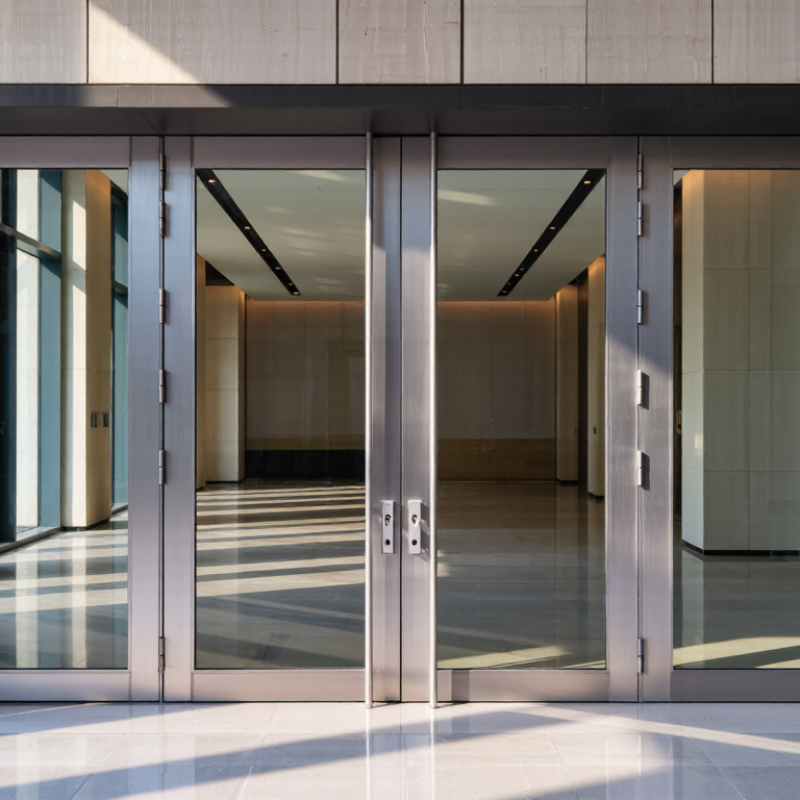
Double-door suppliers serve global building markets by matching products to how buildings are used, not just to opening dimensions. A hospital may need smooth, frequent operation, while a warehouse needs wide clearance for carts and equipment. Suppliers typically discuss door materials, frame construction, hardware, finish, and required performance before production. Small details matter. A few millimeters can complicate installation.
Export projects add another layer. Suppliers coordinate drawings, packaging, shipping schedules, and technical documents with contractors and distributors. They may adapt sizes, handing, or surface finishes to local project specifications. Fire, acoustic, and security claims should be supported by relevant test documentation for the intended market; buyers should verify requirements with the project’s qualified design team. Clear specifications reduce costly misunderstandings, though they cannot prevent every delay.
Reliable service continues after delivery. Technical support can help installers check alignment, clearances, and hardware operation on site. Replacement parts and maintenance guidance also matter when a building is far from the factory. That sounds simple. It often isn’t. Time zones, changing schedules, and incomplete measurements can slow decisions, so experienced suppliers ask direct questions and confirm details in writing. Their value is not only in making doors, but in helping project teams move from drawings to a working entrance.
Global suppliers offer double doors in several operating styles. The familiar hinged pair suits entrances, offices, and rooms with generous clearance. One leaf may stay fixed while the other opens for daily use. French-style doors add broad glass panels and bring daylight into a room. Check swing direction, frame depth, and threshold height before selecting them.
Sliding double doors move along tracks instead of swinging into a room. They work well beside patios or where floor space is limited. Bifold pairs fold toward the sides, creating a wide opening for closets and flexible interior spaces. Some suppliers also provide pivoting designs, though these need careful planning around weight and clearances. Small details matter.
Materials shape both performance and appearance. Wood offers a warm finish, while aluminum and steel can support slimmer frames or heavier-duty applications. Glass-filled designs may use insulated panes for comfort and reduced outside noise. For commercial projects, suppliers may offer rated assemblies with tested hardware; request documentation matched to the exact door configuration. Specifications can look tidy on paper, but real openings are rarely perfect. Measure the finished opening, not just the drawing, and confirm installation requirements with a qualified professional.
Recognition among double door suppliers differs by region because climate, building styles, and project requirements vary. In Europe, buyers often look for suppliers with clear fire, acoustic, and thermal performance documentation. Detailed drawings and consistent finish samples matter, especially for renovation projects where openings may not be perfectly square. Regional reputation alone is not enough.
Across North America, suppliers are commonly assessed on product range, delivery reliability, and access to replacement hardware. For commercial sites, check whether the supplier can provide tested configurations, installation guidance, and support after delivery. A door leaf may look sturdy in a showroom, but hinges, seals, and frame tolerances affect how it performs every day.
In Asia-Pacific, manufacturing capacity and export experience can be important, while local service networks help resolve installation issues. Buyers in the Middle East, Africa, and Latin America may also weigh heat resistance, moisture control, and dependable shipping schedules. Requirements differ within these broad regions, so avoid treating them as one market. Ask for project references, verified test reports, and realistic lead times. I would still inspect samples. Even a polished specification sheet can miss details such as uneven gaps, weak edge finishing, or hardware that feels rough after repeated use.
Compare suppliers against the same specification, not glossy catalogues. For glazed exterior double doors, request tested U-factor, air-leakage, and water-penetration results for the exact size, frame, glazing, and hardware offered. A generic certificate may not cover your build.
The U.S. Department of Energy estimates that heat gain and loss through windows account for 25–30% of home heating and cooling energy use. This is a useful warning about weak envelope performance, though not a door-only figure.
Check the report date, testing laboratory, and whether independent tests followed recognized methods. Check the details. Threshold height, meeting-stile seals, and hardware adjustment can affect everyday performance.
Compare production and delivery evidence too: stated capacity, documented quality checks, replacement-parts availability, warranty exclusions, and realistic lead times. Request a recent inspection record and a reference project with similar opening dimensions and exposure.
The IEA’s 2023 Buildings report says building operations used about 30% of global final energy in 2022, underscoring why thermal performance deserves measurable proof.
Compare landed cost, including packaging, freight, installation tolerances, and after-sales response—not unit price alone. Use the same checklist for every bid. No scorecard catches every site problem; a sample inspection can reveal uneven finishes, stiff locks, or seal gaps. A supplier’s hesitation is worth noting, but it is not proof of poor quality.
A double door can look solid in a showroom and still leak air at the meeting stile. Ask suppliers for test reports covering the exact door, frame, glazing, and hardware configuration. Check thermal transmittance, air leakage, water resistance, and acoustic performance against standards relevant to the project. Do not rely on a brochure alone. Request traceable test dates and laboratory details.
The International Energy Agency’s 2023 Global Status Report for Buildings and Construction says buildings used 34% of global energy in 2022 and produced 37% of energy- and process-related carbon dioxide emissions. That makes insulation and airtightness practical buying checks, not just technical details. Compare reported figures with the project’s climate and installation conditions. A strong rating can disappoint if the frame is fitted poorly.
Ask how the supplier controls dimensions, seal compression, finish quality, and hardware alignment across production batches. Request a sample corner or finished unit, plus written quality-control records. Check lead times, packaging, replacement-part availability, warranty exclusions, and references for similar projects. Small details matter. I would still question vague claims like “weatherproof”; they sound reassuring, but prove little without test evidence.
“Top” depends on the project, destination market, door material, performance requirements, and service needs. Use the supplier profiles below to identify the right type of manufacturer; they are categories, not a company ranking.
| Supplier Profile | Typical Double-Door Products | Best Fit For | Evidence to Request | Key Questions for Buyers |
|---|---|---|---|---|
| Commercial steel-door manufacturer | Hollow-metal or steel double doors, frames, hardware preparations, and configurable finishes. | Commercial buildings, service areas, schools, and other projects requiring durable door-and-frame assemblies. | Product data sheets, material and finish specifications, dimensional drawings, and test or certification documents relevant to the project. | Are the leaf, frame, hinges, locks, and other specified components compatible as one assembly? What corrosion protection and finish options are available? |
| Timber-door manufacturer | Interior or exterior timber double doors, often available in different core constructions, veneers, and finishes. | Residential and commercial projects where appearance, design flexibility, or acoustic performance is important. | Construction details, species or veneer information, finish samples, moisture-related guidance, and test reports for any claimed performance. | How are the doors suited to the installation environment? Are both leaves supplied with the required meeting-stile, flush-bolt, and hardware arrangements? |
| Aluminum-and-glass door manufacturer | Framed glazed double doors and entrance systems, with options for glazing, thresholds, and access hardware. | Building entrances and locations where visibility, daylight, or a contemporary glazed appearance is required. | System drawings, glass specifications, hardware schedules, and applicable test evidence for the complete configuration. | What glazing types and thicknesses can the system accept? Are the frame, seals, threshold, and hardware suitable for the site exposure and intended use? |
| Fire-door specialist | Fire-rated double-door sets in materials and configurations supported by the supplier’s tested systems. | Projects with fire-compartmentation requirements, subject to the local building code and authority approval. | Valid test, classification, or certification documents for the required market, plus installation instructions and approved hardware details. | Does the evidence cover the exact door configuration, sizes, glazing, seals, frame, and hardware? Are both leaves and the meeting stile covered by the tested assembly? |
| Industrial or insulated-door manufacturer | Large-format, insulated, or heavy-duty double doors for service, utility, and industrial applications. | Facilities requiring particular opening dimensions, thermal performance, or frequent operational use. | Opening and clearance drawings, insulation-performance data where claimed, operating-cycle information, and maintenance requirements. | What are the maximum supported dimensions and operating conditions? Are the structure, hinges, closers, and locking system designed for the expected usage? |
| Project-based door-set supplier | Coordinated door leaves, frames, hardware, seals, and finish options assembled to a project schedule. | Multi-opening projects that need consistent specifications, documentation, and delivery coordination. | Opening-by-opening schedules, coordinated shop drawings, hardware submittals, quality-control records, and packaging plans. | Who is responsible for checking dimensions and coordinating hardware? How are revisions, replacements, delivery sequence, and after-sales issues managed? |
| Buyer Check | What to Verify Before Ordering | Why It Matters |
|---|---|---|
| Applicable standards and approvals | Confirm which regulations and standards apply in the destination market. For fire doors, check that the documentation applies to the specified door-set configuration; standards and approval routes vary by jurisdiction. | A certificate or test report for a different size, material, component, or market may not demonstrate compliance for the proposed assembly. |
| Double-door configuration | Specify active and inactive leaves, handing, meeting stile, astragal if required, flush bolts, clear opening, swing direction, and hardware locations. | Clear configuration details help prevent installation conflicts and ensure the opening works as intended. |
| Dimensions and tolerances | Agree whether dimensions refer to the rough opening, frame, or door leaves. Request approved drawings and installation clearances before production. | Door and frame dimensions must coordinate with the prepared opening and installation method. |
| Complete hardware set | Confirm hinges, locks, closers, panic or exit devices where required, seals, thresholds, and compatibility with the selected door and frame. | Hardware choices affect function, accessibility, security, and—where applicable—the approved performance of the door set. |
| Quality and production control | Ask for the inspection plan, traceability information, defect-handling process, and quality-management documentation. Verify the scope and validity of any claimed certification. | Quality-system credentials do not replace product-specific test evidence, but documented controls can help buyers assess manufacturing consistency. |
| Commercial and delivery terms | Obtain a written quotation covering specification, quantities, packaging, delivery terms, lead time, payment schedule, warranty, spare parts, and replacement procedures. | Clear terms make quotations comparable and reduce uncertainty about logistics and responsibility after delivery. |
| Samples and references | Where practical, review finish samples, a production sample, installation instructions, and references for projects with similar requirements. | Samples and relevant references help assess finish quality, documentation, communication, and the supplier’s experience with comparable work. |
Standards, certifications, fire ratings, and other performance claims are market- and configuration-specific. Buyers should verify current requirements with the project design team and the relevant local authority before placing an order.
