
A Clip On Study Lamp can turn a crowded desk into a more focused study space. It clips to a shelf, headboard, or desk edge, freeing room for notebooks and keyboards. But the best style depends on where and how it will be used. A narrow beam may suit late-night reading, while a flexible neck can direct light across a workbook. Small details matter: clamp width, hinge movement, brightness controls, and whether the lamp stays steady when adjusted.
This guide compares the top types, including adjustable LED lamps, gooseneck models, rechargeable options, and lamps with magnifying lenses. Each offers different benefits and trade-offs. Lighting researcher Dr. Mariana Figueiro’s work points to a useful principle: lighting should support the visual task while considering comfort and well-being. That is a paraphrase, not a direct quotation. A bright lamp is not automatically a better one. Glare on glossy pages can distract, and a clamp that slips can become frustrating.
The sections ahead look at light direction, power source, portability, and practical features. They also consider which designs work best for small desks, shared rooms, and reading in bed. No single lamp fits every setup. A tidy product chart can still miss the feel of a lamp’s controls or the space its clamp occupies. Check dimensions and adjustability before choosing; those details are easy to overlook.
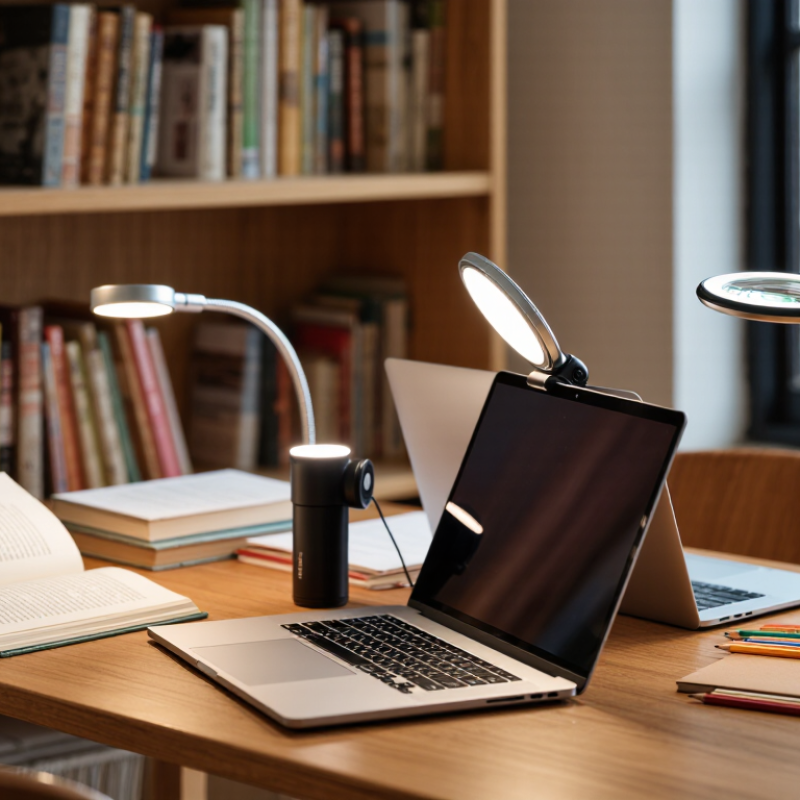
Clip-on study lamps generally fall into four categories: articulated task lamps, fixed-neck lamps, rechargeable cordless lamps, and magnifying lamps.
Articulated arms or goosenecks direct light onto notes without lighting the entire room. Fixed-neck models are lighter and simpler, though their beams are harder to reposition. Check the spring clip and its padding. A lamp that slides off a thin desk edge gets annoying fast.
Rechargeable lamps suit shelves and shared desks with awkward outlet access. Compare battery runtime at your usual brightness, not just the lowest setting. Dimmable LEDs make it easier to adjust light for reading, handwriting, or screen work. Magnifying clip lamps help with small print, but their lenses can restrict the viewing area. That trade-off is easy to miss.
I may be overvaluing flexibility, but a steady clamp often matters more than extra modes.
The U.S. Department of Energy’s Energy Saver guidance says LEDs use at least 75% less energy and last up to 25 times longer than incandescent lighting.
That supports choosing LED technology, but comfort still depends on clamp stability, shade depth, and careful placement.
LED Clip-On Lamps and Their Lighting Features
LED clip-on study lamps suit desks where space is tight. Their spring clips attach to shelves, bed frames, or table edges, while adjustable necks direct light onto a book or keyboard. A focused beam can reduce glare on nearby screens, though placement matters. Small detail, big difference.
Look for adjustable brightness and color temperature. A warm setting can feel comfortable during evening reading, while a cooler, neutral tone may help printed notes look clearer. Dimming is useful when moving between close work and a softly lit room. Some lamps also offer broad, even light; others create a narrower pool that may leave page edges dim. Check the beam on your actual desk.
LEDs usually produce less heat than older bulb types, which helps when a lamp sits close to paper or fabric. Still, brightness claims alone do not show how evenly a lamp lights a page. A high color-rendering rating can make colored diagrams appear more natural, but personal comfort varies. Not every desk needs that. Test the clip’s grip, too: a loose mount can shift the beam while you write.
| Lamp Type | Typical Lighting Features | Adjustability | Best Suited For | Points to Consider |
|---|---|---|---|---|
| Basic LED Clip-On | A focused beam for nearby reading or writing; many models offer more than one brightness level. | Usually has a pivoting head or short flexible neck. | Everyday study at a desk, bedside, or shared table. | Check the clip opening and padding to ensure a secure fit without marking the surface. |
| Gooseneck LED Clip-On | Directs light onto a page or work area; some versions include dimming or selectable color temperatures. | A bendable neck allows the light direction and height to be repositioned. | Reading, note-taking, and changing between different desk setups. | A longer neck can offer more reach, but should remain stable in the chosen position. |
| Multi-Mode LED Clip-On | Often combines several brightness levels with warm, neutral, or cool-white settings. | Light output and, on some models, color temperature can be changed using onboard controls. | Users who want to tailor the light to different tasks or room conditions. | Controls and available settings vary; color-temperature labels are typically given in kelvins. |
| Rechargeable LED Clip-On | Battery-powered LED lighting, often with multiple brightness settings; some models can also operate while connected to power. | Typically has a movable head or neck and can be positioned without a nearby outlet. | Portable study, travel, or desks where cable access is inconvenient. | Battery runtime depends on capacity and brightness setting; check charging method and recharge time. |
| Wide-Head LED Clip-On | A broader illuminated area can spread light across more of a book, notebook, or keyboard than a narrow beam. | The head may tilt or swivel to help aim light across the work surface. | Studying with open books, larger notebooks, or multiple materials on a desk. | A wider head can require more clearance and may not fit narrow shelves or compact clips. |
| Magnifying LED Clip-On | Pairs a magnifying lens with nearby illumination to make small print or fine details easier to inspect. | The lens and light assembly can usually be positioned over the item being viewed. | Detailed reading, crafts, model work, or close-up tasks. | Lens magnification and working distance affect the usable viewing area; it is less suited to general desk lighting. |
Features are typical of these lamp categories; specifications and controls vary by model.
USB-powered clip-on lamps draw power from a nearby port or adapter, so they can stay lit without waiting for a battery to recharge. They suit a desk with a laptop, power bank, or USB wall plug. Check cable reach before buying; a short cord can pull the lamp out of position. Rechargeable versions work without a live outlet nearby. No cable to manage. That helps on shared tables or during brief power interruptions. Runtime varies with brightness, battery size, and age, so treat advertised figures as estimates rather than guarantees.
Look for a padded, firm clip and a flexible neck that holds its angle. A narrow beam can light a notebook while keeping the rest of the room dim, but it may leave page edges shadowed. Test the lamp at your usual reading distance. Cool white light can make small print look crisp, though some people find it harsh late at night. I would not assume the brightest setting is best.
Tips: For USB models, confirm whether the cable and adapter are included. For rechargeable lamps, check charging time and whether they can operate while plugged in. Keep the charging port clear of dust, and lower brightness when battery life matters. Small details count.
The chart compares whether each lamp type can operate from a USB power source, a built-in battery, or both. Values indicate availability of a power option, not brightness, runtime, or product performance.
Flexible-neck clip-on lamps use a bendable stem to place light close to a book, notebook, or keyboard. Their shape is easy to reposition without moving the clamp. This works well on a narrow desk or a bedside shelf. Aim the head at the page, then bend the neck away from your eyes. That matters. Direct glare can make long reading sessions uncomfortable.
The trade-off is stability. A long, soft neck may sag after repeated adjustments, especially when the lamp head is heavy. Adjustable-arm designs use hinged sections instead. Their joints hold a chosen angle more firmly, and the arm can reach over a wider area. They suit larger textbooks or shared desks where light needs to shift between tasks.
Check that each joint moves smoothly but does not collapse under the head’s weight. Also test the clamp on your actual surface; thick shelves and rounded edges can be awkward. I might be overthinking the joints, but a lamp that stays put is easier to use than one that needs constant correction.
A gooseneck clip-on lamp suits compact dorm desks and shared tables. Its flexible neck can direct light onto a notebook without taking up desk space. For deeper desks, a swing-arm model reaches farther and keeps the lamp head above books. It is more useful when you switch between handwriting and a laptop. A linear bar lamp spreads light across wider surfaces, such as a craft table or a desk shared by two students. However, a strong beam can create screen glare if the lamp points toward the display.
LED models are practical for long study sessions. The U.S. Department of Energy reports that LEDs use at least 75% less energy than incandescent lighting and can last up to 25 times longer. That efficiency helps when a lamp stays on nightly. Check the clamp opening and desk-edge thickness before buying; a loose grip may wobble when you adjust the neck. A bright lamp is not always a comfortable one.
Tips: Aim the shade at the page, not your eyes or screen. On glossy desks, try a matte bulb or reposition the lamp. Small adjustments matter.
