Top Types of Li Ion Battery Explained Best Options Available?
The demand for li ion batteries has surged in recent years, driven by advancements in technology and a shift towards renewable energy sources. According to a 2023 report by the International Energy Agency, the global market for li ion batteries is expected to exceed $100 billion by 2025. This growth highlights the increasing reliance on these batteries in sectors like electric vehicles and portable electronics.
Li ion batteries come in various types, each with distinct characteristics. They offer high energy density and long cycle life, making them popular choices for numerous applications. However, not all li ion batteries are created equal. Some types may pose safety risks, while others may not perform well under extreme temperatures.
As we explore the best options available, it is essential to consider both performance and safety. The advancement of technology continues to improve the reliability of li ion batteries. Yet, challenges remain in developing environmentally friendly solutions. Understanding these factors is crucial for informed decisions in choosing the right battery type for specific needs.
Understanding Li-Ion Battery Chemistry and Structure
Lithium-ion batteries are essential in today's technology landscape. Their chemistry is complex yet fascinating. They primarily consist of lithium cobalt oxide and graphite. This combination allows for efficient energy storage and high energy density. Reports indicate that the global lithium-ion battery market is projected to reach $129.3 billion by 2027, reflecting their growing prominence.
Understanding the battery's structure is critical. The anode, typically made of graphite, stores lithium ions. The cathode, often lithium cobalt oxide, releases these ions during discharging. A separator keeps the two electrodes apart, preventing short circuits. The electrolyte facilitates the movement of ions. This intricate design is crucial for performance, emphasizing the need for innovation.
Despite their advantages, challenges remain. Overheating and degradation are common issues. Lifespan varies based on usage and charging practices. Industry studies highlight that improper handling can reduce lifespan by up to 50%. As the demand for sustainability grows, research is ongoing. Alternatives, such as solid-state batteries, are being explored, though they present their own obstacles. Understanding these materials is vital for future advancements.
Top Types of Li Ion Battery Explained Best Options Available
| Battery Type |
Chemistry |
Energy Density (Wh/kg) |
Cycle Life |
Application |
| Lithium Cobalt Oxide (LCO) |
LiCoO2 |
150 - 200 |
500 - 1000 |
Smartphones, Laptops |
| Lithium Iron Phosphate (LFP) |
LiFePO4 |
90 - 140 |
2000 - 5000 |
Electric Vehicles, Energy Storage |
| Lithium Manganese Oxide (LMO) |
LiMn2O4 |
100 - 150 |
1000 - 2000 |
Power Tools, Electric Bicycles |
| Lithium Nickel Manganese Cobalt (NMC) |
LiNiMnCoO2 |
150 - 220 |
1000 - 2000 |
Electric Vehicles, Grid Storage |
| Lithium Nickel Cobalt Aluminum Oxide (NCA) |
LiNiCoAlO2 |
150 - 220 |
500 - 1000 |
Electric Vehicles |
Common Types of Li-Ion Batteries Used Today
Lithium-ion (Li-ion) batteries are essential in modern technology. They power everything from
smartphones to
electric vehicles. Understanding the common types of Li-ion batteries can help choose the right one for your needs.
One prevalent type is
Lithium Cobalt Oxide (LCO). It's great for electronics and offers high energy density.
However, it’s known for lower thermal stability.
Lithium Iron Phosphate (LFP) is another option. It’s safe and durable but has a lower energy density compared to LCO. This trade-off may not suit all applications.
Lithium Manganese Oxide (LMO) is often used in power tools. It balances performance with cost. Yet, it may fall short in longevity.
Newer options like Nickel Manganese Cobalt (NMC) provide a balance of energy and safety but can be complex to manufacture.
These limitations remind us that the right choice often depends on specific requirements. Understanding these differences is key to making informed decisions.
Comparative Analysis of Popular Li-Ion Battery Brands
When comparing various lithium-ion battery brands, several key factors emerge. Capacity, longevity, and safety are crucial aspects consumers should evaluate. Different brands offer distinct features that cater to specific applications. For instance, some batteries excel in high-performance settings, while others focus on energy density and weight.
Chemistry also plays a significant role in performance. Most battery types fall under lithium nickel manganese cobalt oxide or lithium iron phosphate categories. Each type comes with unique trade-offs, such as charge times and thermal stability. Decisions can become complicated as one must weigh these aspects against personal needs and preferences. Moreover, potential safety concerns, like overheating, require thoughtful consideration during the selection process.
In addition, brand reliability has a substantial impact. Reviews and user experiences can help gauge the overall reputation of a brand. Consumers often find themselves torn between popular choices that promise great performance but may lack longevity. It is essential to reflect on the specific demands of your device. Always consider seeking feedback from trusted sources when making a choice. This introspective approach ensures you select a lithium-ion battery that aligns with your requirements.
Comparative Analysis of Popular Li-Ion Battery Types
This chart illustrates the energy density (mAh/g) and typical cycle life (number of charge cycles) of different types of Li-Ion battery chemistries. The data provides insights into their performance and longevity, important factors when choosing the right battery for various applications.
Factors to Consider When Choosing a Li-Ion Battery
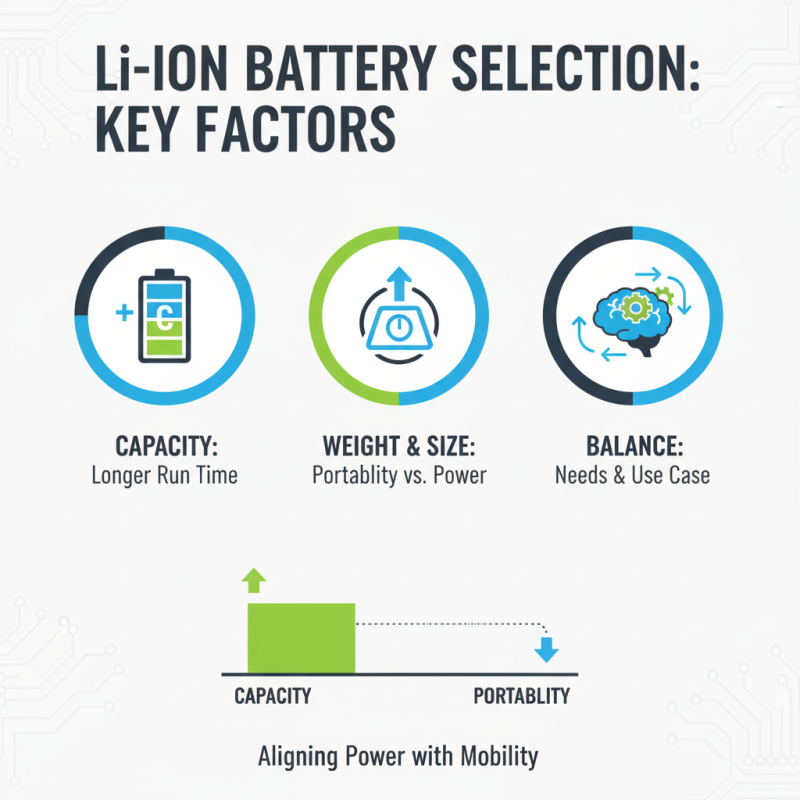
When choosing a Li-ion battery, there are several important factors to consider. Capacity is crucial. Higher capacities mean longer run times, which is essential for devices like electric vehicles or mobile gadgets. Yet, more capacity can lead to increased weight and size. It's a balancing act. Users must align capacity needs with portability requirements.
Another significant factor is discharge rate. Some applications require high discharge rates to perform efficiently. Devices such as power tools may need to draw a lot of current quickly. Conversely, low discharge rates work for devices that require steady, long-lasting power. Pay attention to these specifications for optimal performance.
Temperature tolerance is often overlooked. Some batteries can perform poorly in extreme conditions. High heat can present risks of overheating or reduced lifespan. Cold conditions can impact efficiency and performance. Evaluate the operating environment of the device to ensure reliability.
Lastly, consider the battery's longevity and cycle life. Frequent replacements can be inconvenient and costly. Aim for batteries that provide a good number of charge cycles before the capacity diminishes significantly. This ensures both sustainability and efficiency.
Future Trends in Li-Ion Battery Technology and Applications
The future of lithium-ion (Li-Ion) battery technology is promising, driven by increasing demand for clean energy. According to a recent report by the International Energy Agency, the global market for advanced batteries is projected to grow to $100 billion by 2030. This expansion highlights the importance of Li-Ion batteries in various sectors, including electric vehicles (EVs), renewable energy storage, and consumer electronics.
Innovative methods are evolving to enhance battery efficiency. Solid-state batteries, for instance, offer improved safety and energy density compared to traditional Li-Ion types. Analysts suggest that solid-state batteries could double the energy capacity while reducing risks of thermal runaway. However, challenges remain, such as high production costs and scalability.
Recycling and sustainability are becoming vital areas of focus. Currently, only about 5% of Li-Ion batteries are recycled. This percentage must rise to meet environmental goals. New technologies are emerging, aiming to recover materials efficiently and reduce waste. The transition towards a circular economy within the battery industry is key to improving sustainability. This shift requires innovation and collaboration among various stakeholders.