
How to Choose Storage Batteries for Global Sourcing in 2026?
Choosing storage batteries for global sourcing in 2026 requires more than comparing prices per kilowatt-hour. Buyers must connect chemistry, safety, performance, logistics, and long-term service. A battery that looks affordable on a spreadsheet may create higher costs through weak warranty support, limited spare parts, or difficult recycling arrangements.
The right decision begins with the application. A warehouse backup system may need dependable daily cycling, while a solar project may require high usable capacity during evening demand. Lithium iron phosphate batteries can offer strong thermal stability and cycle performance, but every supplier should provide current test reports, cell traceability, and clear operating limits. Ask for evidence, not promises. Factory audits, sample testing, and documented quality procedures can reveal differences hidden behind identical specifications.
Global sourcing also demands careful attention to transport, customs documentation, installation training, and regional compliance. Confirm whether the supplier supports UN 38.3 testing, safety data documentation, and the certifications required in the destination market. Review warranty exclusions closely. They often matter more than the headline warranty period. A reliable supplier should explain degradation assumptions, response times, firmware updates, and end-of-life handling in plain language.
No checklist is perfect. Real projects change. Exchange rates move, shipping routes tighten, and demand forecasts prove wrong. That is why buyers should compare suppliers using realistic operating conditions, including temperature, charging habits, downtime costs, and service distance. In 2026, the strongest sourcing strategy will balance technical evidence with practical judgment, rather than chasing the lowest initial quote for storage batteries.
Define the Storage Battery Requirements for Your Application
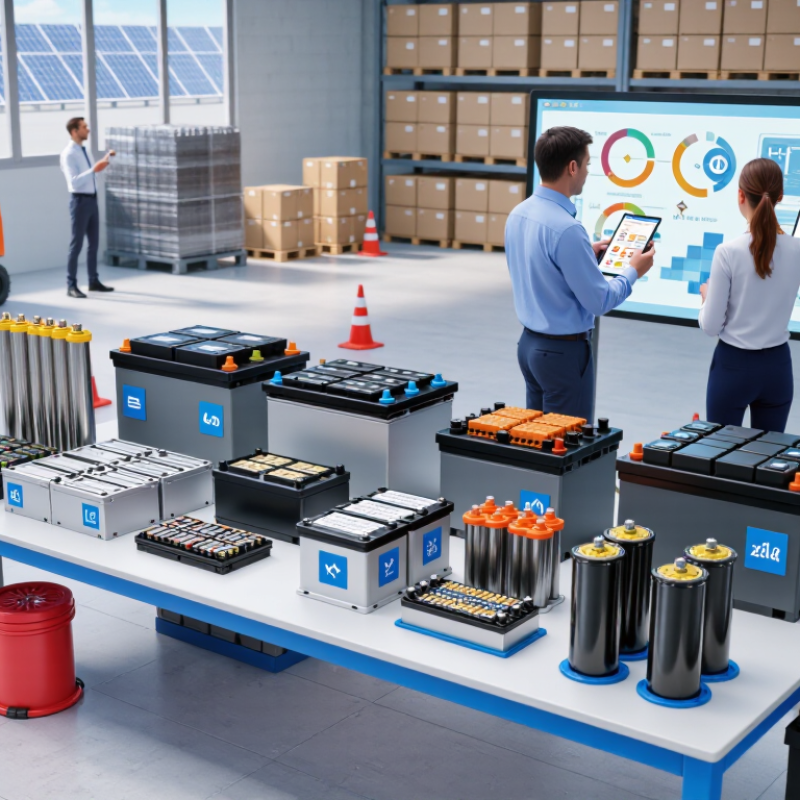
Choosing storage batteries for global sourcing starts with a precise application profile. Define the daily energy demand in kilowatt-hours. Record the normal voltage, peak current, and expected discharge duration. A warehouse backup system may need steady output for four hours. A solar project may require deeper cycling after sunset. These are different battery requirements.
Measure the operating environment carefully. Note ambient temperatures, humidity, dust, vibration, and available installation space. A battery placed in a hot container needs suitable thermal control. A remote site may require low-maintenance monitoring and dependable communication. Specify the battery chemistry, usable capacity, cycle life, charging speed, and acceptable weight. Include the battery management system and its warning functions. Small details matter.
Safety and compliance must match every destination market. Request test reports, traceable production records, transport documentation, and clear warranty conditions. Check whether the supplier can support regional certification and after-sales service. Do not compare prices before comparing usable energy and lifetime performance. The cheapest unit may cost more after early capacity loss. The first specification is rarely perfect. Procurement teams should test real load data instead of relying only on estimates. A pilot batch can reveal voltage drops, connector problems, or software gaps before large-scale purchasing. Be willing to revise the requirements.
How to Choose Storage Batteries for Global Sourcing in 2026? - Define the Storage Battery Requirements for Your Application
A practical, chemistry-neutral screening matrix for defining technical, commercial, safety, and logistics requirements before requesting quotations.
| Application | Typical System Size | Primary Duty Profile | Recommended Usable DoD | Preferred Chemistry Characteristics | Target Cycle Life | Key Environmental Requirement | Sourcing and Validation Priorities |
|---|---|---|---|---|---|---|---|
| Residential Solar Storage | 5–30 kWh per installation | One daily charge and discharge cycle; backup during grid outages | 80–90% | High safetyLong cycle lifeCompact BMS | At least 4,000 cycles at 80% DoD | Indoor or sheltered outdoor use; approximately 0°C to 45°C operating range | Usable energy warranty, state-of-charge accuracy, inverter communication, thermal protection, installation certification, and replacement-part availability |
| Commercial and Industrial Peak Shifting | 100 kWh–10 MWh | Daily peak shaving, demand management, and renewable-energy time shifting | 80–95% | Low cost per kWhHigh efficiencyModular design | 4,000–8,000 cycles, depending on dispatch profile | Container or cabinet installation; forced ventilation or liquid cooling may be required | Round-trip efficiency, degradation model, rack interchangeability, fire-risk mitigation, local service capability, and long-term firmware support |
| Utility-Scale Renewable Integration | 10 MWh–1 GWh+ | Renewable smoothing, energy shifting, frequency response, and grid balancing | 80–95% | Bankable designScalable racksHigh availability | 3,000–8,000 cycles or a project-specific throughput guarantee | Outdoor containerized operation; site temperature, humidity, altitude, and dust must be assessed | Independent performance testing, availability guarantee, augmentation plan, EMS/SCADA compatibility, transport classification, and project-level fire protection |
| Telecom Backup Power | 5–500 kWh per site | Standby operation with occasional deep discharge; frequent shallow cycling in weak-grid areas | 50–80% | Low maintenanceWide temperature toleranceRemote monitoring | 1,500–4,000 cycles for cyclic service; longer calendar life for standby service | Remote sites may require operation from approximately -20°C to 50°C, depending on enclosure and heating | Backup runtime, low-temperature charging limits, remote alarms, enclosure ingress protection, theft resistance, and field-replaceable modules |
| Data Center UPS | 100 kW–10 MW | High-power discharge for minutes, with occasional longer outages and scheduled testing | Usually 50–80% | High powerPredictable failure behaviorFast monitoring | Cycle life is less important than calendar life, availability, and power capability | Controlled indoor environment; stable temperature and humidity are normally required | High-rate discharge test, cell balancing, fault isolation, maintenance bypass compatibility, monitoring redundancy, and service-level response time |
| Off-Grid and Rural Microgrids | 10 kWh–5 MWh | Daily renewable charging with irregular deep discharge and generator integration | 70–90% | Robust BMSSimple serviceHigh temperature resilience | 3,000–6,000 cycles | Dust, humidity, weak-grid conditions, and high ambient temperature may be significant | Black-start capability, generator coordination, spare-module strategy, remote diagnostics, surge protection, and local technician training |
| Electric Vehicle Charging Buffer | 100 kWh–5 MWh | High-power bursts that reduce grid connection peaks and support fast charging | 60–90% | High C-rateFast responseThermal management | 2,000–6,000 cycles, subject to charge and discharge power | Outdoor cabinet or container; cooling capacity must match peak power and ambient conditions | Power-to-energy ratio, transient response, cooling redundancy, charger and EMS integration, fire detection, and high-power acceptance testing |
| Mobile and Temporary Power | 5–500 kWh | Frequent transport, variable loads, and rapid deployment at temporary sites | 70–90% | Low weightMechanical durabilityQuick setup | 1,500–4,000 cycles | Vibration, rain, dust, and changing ambient temperatures require rugged enclosure design | Enclosure rating, lifting points, shock and vibration testing, transport documentation, modular replacement, and connector durability |
| Battery Chemistry Screening Reference | |||||||
| Lithium Iron Phosphate (LFP) | Nominal cell voltage: approximately 3.2 V | Stationary storage, microgrids, backup, and high-cycle applications | 80–95% is commonly specified | Typical gravimetric energy density: approximately 90–160 Wh/kg; strong thermal stability compared with higher-energy lithium chemistries | Approximately 3,000–8,000 cycles, depending on temperature, C-rate, and DoD | Charging below 0°C generally requires controls or heating; thermal management remains necessary | Verify cell consistency, BMS limits, usable-energy definition, thermal propagation testing, communication protocol, and degradation warranty |
| Nickel Manganese Cobalt (NMC) | Nominal cell voltage: approximately 3.6–3.7 V | Applications prioritizing higher energy density and lower system footprint | 70–90% depending on power and life requirements | Typical gravimetric energy density: approximately 150–250 Wh/kg; higher energy density with stricter thermal controls | Approximately 1,000–3,000 cycles, depending on formulation and operating conditions | Requires careful thermal monitoring, protection, and fire-mitigation design | Confirm thermal propagation tests, cell traceability, abuse-test results, cooling design, transport classification, and end-of-life policy |
| Lithium Titanate (LTO) | Nominal cell voltage: approximately 2.3 V | High-power, fast-charge, cold-climate, and very high-cycle applications | 80–95% | Typical gravimetric energy density: approximately 50–100 Wh/kg; excellent power capability and long cycle life | Approximately 10,000–30,000 cycles in suitable operating conditions | Generally strong low-temperature performance; system-level heating and controls still need validation | Compare total cost of ownership rather than purchase price; validate voltage compatibility, fast-charge profile, and long-term throughput data |
| Valve-Regulated Lead-Acid (VRLA) | Nominal cell voltage: 2.0 V | UPS, telecom standby, emergency backup, and cost-sensitive installations | Typically 30–50% for reasonable service life | Typical gravimetric energy density: approximately 30–50 Wh/kg; mature recycling and service practices | Approximately 500–1,500 cycles for cyclic service; calendar life is highly temperature-dependent | Ventilation, temperature control, and correct charging are important; high heat accelerates degradation | Check float-life data, high-rate discharge curves, ventilation requirements, recycling arrangements, shipping weight, and maintenance access |
| Sodium-Ion | Typical nominal cell voltage: approximately 2.8–3.0 V | Emerging stationary storage where material availability, cost, and cold-weather performance are priorities | 70–90%, subject to supplier specification | Typical reported energy density: approximately 90–160 Wh/kg; performance varies considerably by cell design | Approximately 2,000–5,000 cycles in currently reported commercial designs | Potentially favorable low-temperature behavior, but charging and thermal limits must be validated for the specific cell | Request third-party test data, production-scale evidence, warranty terms, certification status, supply continuity, and field-reference data |
Specification note: Values are indicative engineering ranges compiled for preliminary sourcing comparisons, not guaranteed product specifications. Actual performance depends on cell format, electrode design, temperature, charge and discharge rate, depth of discharge, balancing strategy, cooling system, installation conditions, and warranty measurement methodology. Before placing a purchase order, require a complete datasheet, safety documentation, test reports, transport classification, communication protocol, production quality plan, and application-specific acceptance test.
Related Posts
-
What Are the Top Storage Battery Types for 2026?
-
How to Choose Storage Batteries for Global Sourcing in 2026?
-

How to Extend Battery Power for Your Devices and Improve Longevity?
-

Why Choose a Solar Battery for Your Energy Needs?
-

China Top 10 Battery Solutions Suppliers Worldwide
-
7 Tips for Choosing the Best Solar Battery Pack?