Top 10 Storage Batteries in China What You Need to Know
In recent years, the demand for storage batteries has surged in China. These batteries are crucial for renewable energy systems, electric vehicles, and more. This article highlights the top 10 storage batteries available in the Chinese market today.
Storage batteries play a vital role in energy management. They store excess energy for later use, providing power when needed. This feature is especially important with the rise of fluctuating renewable energy sources. Choosing the right battery can be challenging, given the variety of options and technologies available.
Innovative designs and advanced technologies make some batteries stand out. However, not all are created equal. Some may not perform as expected and require careful assessment. Understanding the strengths and weaknesses of each battery is essential for making informed decisions. This overview aims to equip you with the knowledge needed for navigating this complex landscape.
Overview of Storage Battery Types Available in China
In China, the storage battery market offers a variety of options aimed at various applications. The common types include lithium-ion, lead-acid, and sodium-sulfur batteries. Lithium-ion batteries are popular for their energy density. They are lightweight and have a long lifespan. However, their cost can be high, making them less accessible for some industries.
Lead-acid batteries have been around for a long time. They are more affordable but have a shorter lifespan compared to lithium-ion batteries. These batteries are often used in electric vehicles and backup power systems. They are reliable, yet their weight can be a drawback for mobile applications. Sodium-sulfur batteries, though less common, offer high capacity and are excellent for grid storage. However, their operating temperature requirements make them complex.
While selecting a storage battery, consider the specific needs of your application. Energy requirements, cost, and longevity are crucial factors. Researchers are constantly exploring new technologies to improve battery performance. There is room for innovation and improvement in all types of storage batteries. Each type has its strengths and weaknesses, leading to interesting choices.
Top 10 Storage Batteries in China
| Battery Type |
Nominal Voltage (V) |
Capacity (Ah) |
Cycle Life (Cycles) |
Applications |
| Lithium Ion |
3.7 |
100 - 300 |
500 - 3000 |
Electric Vehicles, Consumer Electronics |
| Lead Acid |
2.0 |
40 - 200 |
300 - 1200 |
Backup Power, Automobiles |
| Nickel Cadmium |
1.2 |
600 - 2000 |
1500 - 2000 |
Power Tools, Emergency Lighting |
| Nickel Metal Hydride |
1.2 |
600 - 2800 |
500 - 1000 |
Hybrid Vehicles, Consumer Electronics |
| Sodium Sulfur |
2.0 |
100 - 200 |
2500 - 4500 |
Grid Energy Storage |
| Flow Battery |
1.0 - 2.0 |
100 - 1000+ |
2000 - 10000 |
Large Scale Energy Storage |
| Solid State |
2.0 - 3.0 |
100 - 500 |
1000 - 5000 |
Consumer Electronics, Electric Vehicles |
| Lead Carbon |
2.0 |
100 - 300 |
1500 - 2000 |
Renewable Energy Storage |
| Biodegradable Battery |
1.5 |
50 - 200 |
300 - 1000 |
Small Electronics, Eco-Friendly Applications |
Key Players in the Chinese Storage Battery Market
The Chinese storage battery market is rapidly evolving. With a focus on innovation, many key players are pushing the boundaries of technology. These companies strive to improve energy density and longevity, ensuring batteries meet diverse consumer needs. Their efforts result in more efficient storage solutions suitable for various applications.
Experts suggest considering specific features when choosing storage batteries. Look for energy capacity, discharge rates, and lifespan. These factors significantly impact battery performance. Some brands fall short on longevity, raising questions about their reliability. Consumer feedback highlights the importance of real-world performance over theoretical specifications.
In this competitive landscape, it's essential to keep an eye on market trends. Emerging technologies like solid-state batteries show promise. However, challenges still exist in terms of cost and scalability. The direction of this market necessitates continuous adaptation from both manufacturers and consumers. Embracing change will ultimately lead to better products.
Technological Innovations in Chinese Battery Manufacturing
In recent years, Chinese battery manufacturing has seen remarkable technological innovations. Companies are focusing on enhancing energy density, which is crucial for improving battery performance. Higher energy density means longer-lasting batteries. Manufacturers are also adopting advanced materials to achieve this goal. New types of lithium-ion and solid-state batteries are being explored. These alternatives promise safety and efficiency.
Moreover, there is a push toward sustainability in production processes. More manufacturers are emphasizing the recycling of batteries. Yet, substantial challenges remain. The recycling technologies themselves are still developing. It is unclear how effective they will be in mass production. Also, the environmental impact of raw material extraction is a pressing concern.
Integration of artificial intelligence in battery manufacturing is another area of exploration. AI can optimize production lines, reduce waste, and enhance overall efficiency. However, reliance on technology raises questions. Are these advancements outpacing regulatory frameworks? The industry faces scrutiny on both ethical and environmental fronts. Balancing innovation with responsibility remains a key challenge.
Top 10 Storage Batteries in China: Performance Comparison
Regulatory Standards Affecting Storage Batteries in China
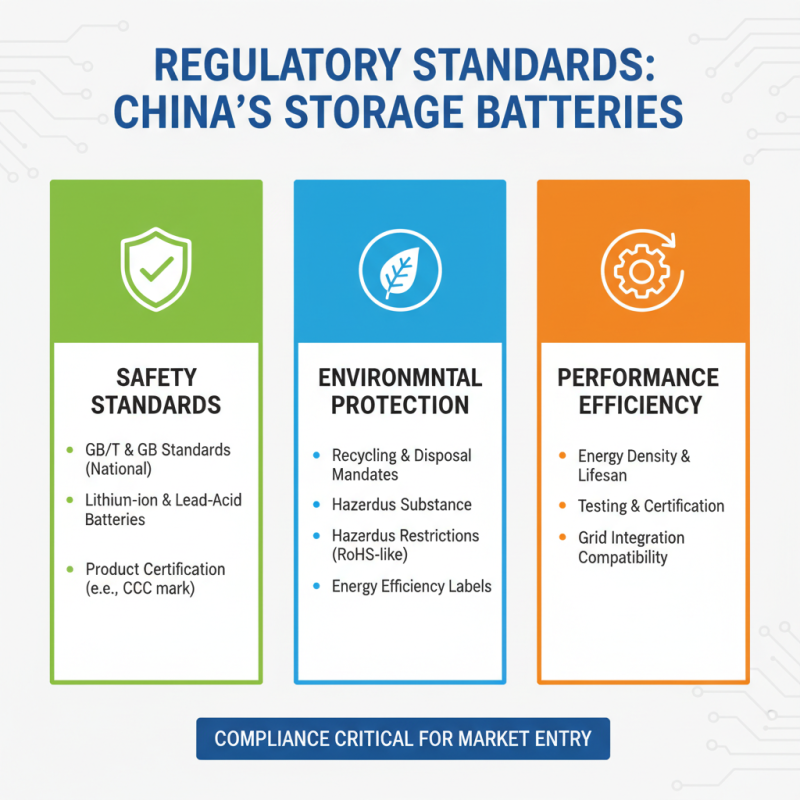
The regulatory landscape for storage batteries in China is complex and constantly evolving. Various government bodies have implemented standards that manufacturers must meet. These regulations ensure safety, environmental protection, and performance efficiency. Compliance with these standards is critical for market entry.
Safety regulations are particularly stringent. They cover aspects like battery materials, design, and testing methods. For instance, the use of hazardous substances is closely monitored. Manufacturers need to prove their products do not contain harmful elements. Regular audits ensure adherence to these norms. However, some companies struggle with compliance. This can lead to product recalls or penalties.
Environmental standards are also vital. They push for responsible recycling and waste management practices. With the rising use of storage batteries, proper disposal methods are crucial. Yet, many manufacturers still overlook these practices. This oversight could impact their reputation and consumer trust. Regulatory compliance isn’t just about ticking boxes; it’s about fostering a sustainable future.
Future Trends in the Chinese Storage Battery Industry
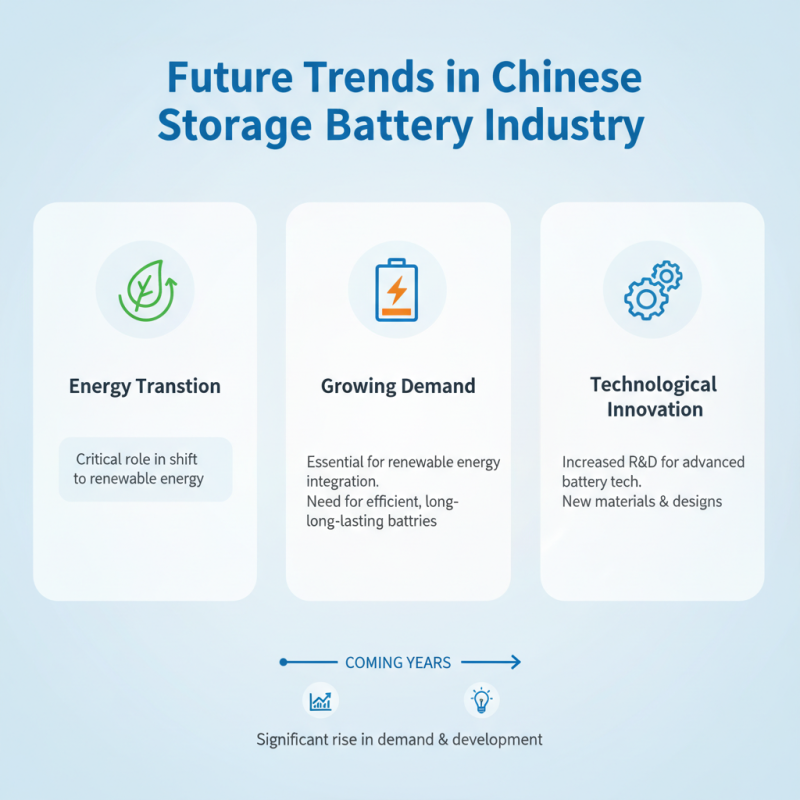
The storage battery industry in China is rapidly evolving. It plays a critical role in energy transition initiatives. As renewable energy sources grow, storage solutions will be essential. The demand for efficient, long-lasting batteries is anticipated to rise significantly in the coming years. This shift is expected to drive innovation and development in battery technology.
Investors should pay attention to new materials and technologies being explored. Lithium-sulfur batteries, for example, offer a promising alternative. These batteries could potentially outperform traditional lithium-ion models. However, they still face challenges in terms of lifespan and efficiency. Companies need to address these issues through ongoing research.
**Tips:** Consider exploring opportunities in emerging technologies. Stay informed about policy changes in green energy. Network with professionals in the battery industry for valuable insights. The evolution of the storage battery landscape is subject to constant change. Companies that adapt quickly will more likely succeed.