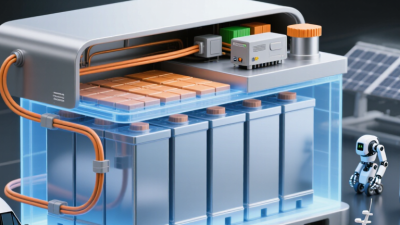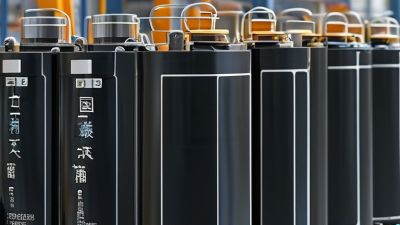
A lithium ion battery pack is a group of connected lithium-ion cells, protection circuits, sensors, and housing. It stores electrical energy chemically, then releases it to power devices, vehicles, tools, and backup systems. Unlike a single cell, a pack can deliver higher voltage, greater capacity, or both.
Inside, cells are arranged in series, parallel, or a combination of both. Series connections raise voltage. Parallel connections increase available capacity and current. A battery management system monitors temperature, voltage, and charging conditions. It can disconnect the pack when readings become unsafe. Some packs also include cooling plates, fuses, communication ports, and balancing circuits.
The numbers can feel confusing. A pack rated at 48 volts and 20 amp-hours has a nominal energy of about 960 watt-hours. Real performance depends on temperature, load, age, charging habits, and cell quality. The label is not the whole story. A compact pack may power a tool for hours, while a cold or aging pack may run for much less time.
Choosing or evaluating a lithium ion battery pack requires more than comparing capacity. Check its intended application, charger compatibility, enclosure design, and protection features. Professional testing should confirm performance under realistic conditions. Standards and manufacturer instructions matter greatly. They are not decorative paperwork.
Small details matter.
Even experienced users can misjudge heat, storage conditions, or remaining capacity. This guide explains the main components, ratings, operating principles, and practical limitations of lithium-ion battery packs. It also acknowledges an important uncertainty: no battery specification predicts every real-world result perfectly.
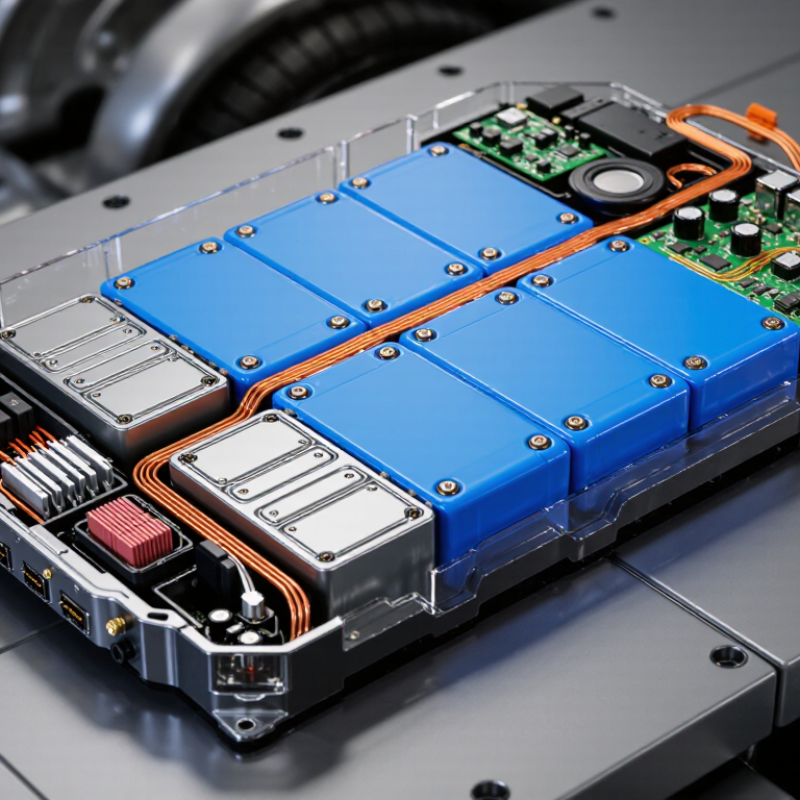
A lithium-ion battery pack is an assembled energy system, not one oversized battery cell. It combines many cells into modules, then connects them in series and parallel. Series connections raise voltage. Parallel connections increase capacity. A battery management system monitors voltage, temperature, and current inside the enclosure. It also limits charging when conditions become unsafe.
The simple definition is useful, but incomplete. Real-world performance depends on chemistry, cell matching, cooling, wiring, and software settings. A pack may feel powerful during acceleration, yet lose capacity in cold weather. Heat creates another problem. Poor thermal control can shorten service life and increase safety risks. The International Energy Agency reported that global battery demand for the energy sector exceeded 750 GWh in 2023, rising about 40% from the previous year. That growth shows why pack design matters beyond laboratory ratings.
Cost data also reveals the industry’s rapid change. BloombergNEF’s 2024 Battery Price Survey reported an average lithium-ion pack price of 115 dollars per kWh, down 20% year over year. This figure is useful, but it is not a universal price. Pack size, materials, manufacturing location, and safety requirements alter the final cost. I have found that advertised capacity can mislead without usable-capacity figures. A pack labeled 60 kWh may deliver less energy in daily operation because of reserve limits, temperature, and aging. That small distinction deserves more attention.
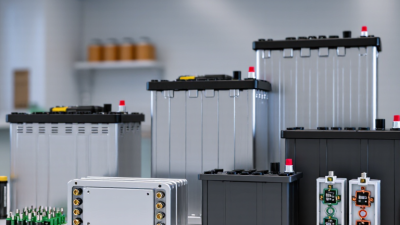
A lithium-ion battery pack is a controlled assembly of cells that stores and delivers electrical energy. It is not merely a box. Inside, individual cells connect in series to raise voltage and in parallel to increase capacity. These cells form modules, although some modern designs reduce or remove separate module housings. The arrangement depends on vehicle range, power demand, space, and cooling requirements.
The battery management system monitors cell voltage, temperature, current, and state of charge. It balances cells and can disconnect the pack during abnormal conditions. Busbars carry current between cell groups, while contactors, fuses, and high-voltage interlocks manage electrical isolation. Cooling plates, thermal interface materials, and sensors limit heat buildup. The enclosure adds structural protection and helps control moisture, vibration, and impact.
The International Energy Agency reported that the average lithium-ion battery pack price fell 14% in 2023, reaching about 139 dollars per kilowatt-hour in its Global EV Outlook 2024. Lower costs increase pressure to simplify pack architecture. However, simpler construction can make repair, cooling, or fault detection more difficult. That trade-off matters. A pack may look efficient on a diagram, yet real-world performance depends on connections, temperature gradients, software settings, and manufacturing consistency. Industry testing therefore combines electrical measurements with thermal imaging, insulation checks, and repeated charge-discharge cycles. Even these tests are imperfect. Field conditions remain harder to reproduce.
A lithium-ion battery pack is a coordinated group of cells, sensors, wiring, and protective controls. Cells connect in series to increase voltage and in parallel to increase capacity. A battery management system monitors every cell. It measures voltage, current, and temperature. Small differences matter.
During discharge, lithium ions travel from the negative electrode to the positive electrode through the electrolyte. Electrons take a different route through the external circuit, powering a motor or device. Charging reverses this movement. The charger controls current and voltage, while the management system limits unsafe conditions. The International Energy Agency reported that global electric-vehicle battery demand reached about 750 GWh in 2023, rising roughly 40% from the previous year. That scale makes reliable control essential.
Heat is the quiet problem. Internal resistance creates heat during acceleration, fast charging, and cold operation. Cooling plates, thermal sensors, and spacing help move heat away from the cells. The pack also uses contactors and fuses to interrupt power during a serious fault. In practice, a battery is less predictable than a simple fuel tank. Age, temperature, charging habits, and cell imbalance change its usable energy. The IEA’s Global EV Outlook 2024 also shows how quickly battery deployment is expanding, but capacity ratings still need careful interpretation. A pack marked 60 kWh may deliver less energy in winter or near the end of its service life. Real measurements can be humbling.
| Data Dimension | Typical Description or Value | Role in the Battery Pack | Important Notes |
|---|---|---|---|
| Definition | An assembly of rechargeable lithium-ion cells, electrical connections, sensors, protection circuits, and mechanical housing. | Stores electrical energy and delivers it to a device, vehicle, or electrical system. | A battery pack is larger and more complex than a single electrochemical cell. |
| Common Cell Arrangement | Cells are connected in series to increase voltage and in parallel to increase capacity and current capability. | Allows the pack to meet the voltage, energy, and power requirements of its application. | A pack may contain a few cells or many cells, depending on the required output. |
| Nominal Cell Voltage | Approximately 3.6–3.7 volts for many lithium-ion chemistries. | Provides the basic voltage building block for calculating pack voltage. | The exact voltage depends on the cathode chemistry and operating conditions. |
| Typical Maximum Charge Voltage | Often about 4.2 volts per cell for common lithium-ion cells. | Defines the upper voltage limit during constant-current and constant-voltage charging. | The specified limit varies by cell chemistry and manufacturer design. |
| Energy Calculation | Energy in watt-hours is approximately voltage multiplied by ampere-hours: Wh ≈ V × Ah. | Estimates how much electrical energy the pack can store. | Actual usable energy is lower than the nominal rating because of efficiency limits and operating restrictions. |
| Main Cell Components | Cathode, anode, separator, electrolyte, current collectors, and casing. | Enable reversible movement of lithium ions and electrons during charging and discharging. | Electrons travel through the external circuit, while lithium ions move through the electrolyte. |
| Discharge Process | Lithium ions move from the anode toward the cathode inside the cell; electrons flow through the external circuit. | Supplies electrical power to the connected load. | The pack voltage gradually decreases as stored energy is used. |
| Charging Process | An external charger drives lithium ions back toward the anode while electrons flow through the charging circuit. | Restores the pack’s stored chemical energy. | Many packs use a constant-current followed by constant-voltage charging profile. |
| Battery Management System | Electronic control system that monitors cell voltage, pack current, and temperature. | Helps prevent overcharging, excessive discharge, overcurrent, overheating, and cell imbalance. | Some systems also estimate state of charge and state of health. |
| Cell Balancing | Equalizes the voltage or state of charge of cells connected in series. | Improves usable capacity, performance, and pack safety. | Balancing may be passive, using resistors, or active, using energy-transfer circuits. |
| Thermal Management | May use air cooling, heat spreaders, thermal interface materials, or liquid cooling. | Controls heat generated during charging and discharging. | Temperature control supports safety, performance, and longer service life. |
| Typical Operating Temperature | Many lithium-ion cells operate near 0–45°C while charging and approximately −20–60°C while discharging, subject to the cell specification. | Defines the environmental range in which the pack can operate safely. | Charging outside the approved temperature range can cause damage or create safety risks. |
| Power Output | Determined by pack voltage, cell current capability, internal resistance, wiring, and cooling. | Controls whether the pack can handle continuous loads and short-duration peaks. | High current increases heat generation and may reduce available capacity. |
| Cycle Life | Commonly several hundred to more than 1,000 full-equivalent cycles, depending on chemistry, depth of discharge, temperature, and charging rate. | Indicates how many charge-and-discharge cycles the pack may complete before significant capacity loss. | A cycle is often measured as a full-equivalent cycle rather than one partial use event. |
| Energy Density | Commercial lithium-ion cells commonly provide roughly 150–300 Wh/kg at the cell level, with pack-level values typically lower. | Describes how much energy can be stored for a given mass. | Pack housings, cooling systems, wiring, and control electronics reduce system-level energy density. |
| Safety Features | Fuses, contactors, current sensors, temperature sensors, pressure-relief features, insulation, and protective software. | Limits abnormal electrical, thermal, and mechanical conditions. | Protection design must match the cell chemistry, pack configuration, and intended application. |
| Common Applications | Portable electronics, cordless tools, light electric vehicles, electric vehicles, energy-storage systems, and backup power equipment. | Provides rechargeable power in applications requiring high energy density and controllable output. | Pack voltage, capacity, cooling, and protection requirements vary significantly by application. |
| End-of-Life Considerations | Capacity and power capability decline over time because of chemical aging, use, heat, and storage conditions. | Determines when the pack no longer meets the application’s performance requirements. | Used packs should be handled and recycled through appropriate battery-recycling channels. |
Note: Values are typical industry ranges and can vary according to cell chemistry, pack design, operating conditions, and safety specifications.
A lithium-ion battery pack combines many cells with a battery management system, wiring, cooling parts, and a protective enclosure. The cells store energy, while the management system monitors voltage, temperature, and charge balance. In real use, pack performance depends on design, not cell chemistry alone.
BloombergNEF’s 2024 Battery Price Survey reported an average pack price of 115 dollars per kilowatt-hour, a 20% decline from 2023.
Lithium iron phosphate, or LFP, is valued for thermal stability, long cycle life, and lower material cost. Nickel-manganese-cobalt and nickel-cobalt-aluminum chemistries usually provide higher energy density. They can reduce pack weight, but thermal control becomes more demanding. Lithium titanate offers rapid charging and strong low-temperature performance, although its energy density is often lower. The best type depends on the vehicle, storage system, climate, and duty cycle.
Key measurements include energy density, power output, usable capacity, charging speed, cycle life, and operating temperature.
The International Energy Agency reported that global electric-car battery demand reached about 750 gigawatt-hours in 2023. That scale makes reliability increasingly important.
Yet advertised capacity is not fully usable. Manufacturers reserve part of it to reduce degradation. Cold weather can also reduce range and charging speed. Laboratory figures remain useful, but they do not perfectly represent daily driving. That gap deserves attention.
A lithium-ion battery pack contains cells, wiring, protective controls, and often a battery management system. Its design allows stored electrical energy to power phones, medical equipment, tools, scooters, and backup systems. Cell chemistry, capacity, voltage, and enclosure quality determine its practical performance. A pack is not simply a larger battery. It is an electrical system that needs coordinated monitoring.
Charging requires the correct charger and compatible voltage range. Follow the manufacturer’s instructions, and never force a damaged connector. Place the pack on a hard, nonflammable surface while charging. Keep it away from direct sunlight, water, and sleeping areas. Stop charging if the pack becomes unusually hot, swollen, cracked, or produces a strange smell. It may still appear functional. That assumption needs checking.
Temperature matters more than many users expect. Charging in freezing conditions can damage cells, while excessive heat accelerates degradation. Allow a warm pack to cool before charging. Avoid leaving it fully depleted for long periods, because deep discharge can trigger permanent capacity loss. A battery management system can reduce risks, but it cannot correct every physical defect. Inspect cables and housing regularly, especially after drops or vibration. Small damage can become serious later. Safe handling is sometimes inconvenient, yet skipping one inspection can cost far more than the lost charging time.