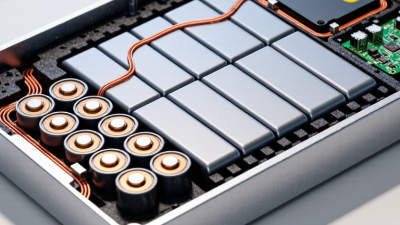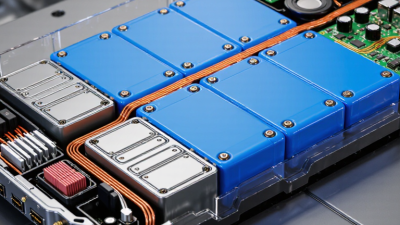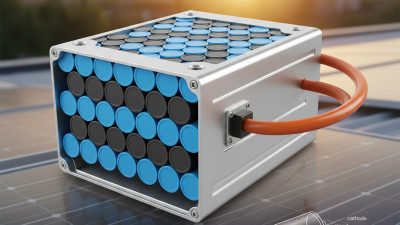
China’s lithium-ion battery pack market includes established manufacturers, specialist integrators, and fast-growing suppliers. Comparing them takes more than checking a company’s name or production capacity. A lithium ion battery pack combines cells, a battery management system, electrical connections, and thermal design. Each part can affect safety, performance, and service life. Small details matter: cell traceability, temperature monitoring, and consistent assembly can distinguish a robust pack from a promising specification sheet. They are easy to overlook.
Professor Martin Winter, a battery researcher at the University of Münster, has helped advance research into battery materials and systems. A practical paraphrase of the principle reflected in his work is: “Battery performance depends on how its materials and systems work together.” This is not a verbatim quotation. It points to why buyers should assess pack design, testing evidence, and application fit—not just headline capacity. This guide introduces ten Chinese manufacturers and considers their product focus, technical capabilities, and market presence. Company claims can change, and public information is uneven. A ranking should not replace direct verification. Ask about the intended application, operating conditions, certifications, warranty terms, and after-sales support. Look closely at the documentation. The best supplier for an electric vehicle may not suit a home energy system or industrial equipment. That distinction is important. And sometimes, the available evidence leaves questions unanswered.

China’s lithium-ion battery pack industry serves electric mobility, energy storage, industrial equipment, and consumer electronics. Its manufacturing base brings cell sourcing, pack assembly, electronics, and testing capabilities closer together. Scale matters. Yet a large production capacity alone does not guarantee a dependable pack.
Manufacturers typically combine cells with a battery management system, wiring, protective structures, and thermal controls. The pack must suit its intended voltage, power demand, operating temperature, and installation space. A compact mobility pack may prioritize weight, while a stationary system needs robust monitoring and service access. Small design choices matter, including connector placement and how heat moves between cells.
Quality depends on more than the cell specification. Incoming checks, welding consistency, insulation, and repeated charge-discharge testing all influence performance. Buyers should review test records, traceability, warranty terms, and how the supplier handles field issues. These details can reveal gaps that a polished sample cannot. The industry is competitive, but comparison is not always simple: test conditions and published figures may differ. A careful assessment should match verified evidence to the actual application, rather than relying on impressive capacity claims alone.
When comparing candidates for a China top 10 lithium ion battery pack list, look beyond production capacity. A capable manufacturer should explain how it selects cells, designs the battery management system, and verifies pack performance. Ask for test records covering temperature, vibration, charge cycles, and protection against overcurrent. Useful evidence includes consistent inspection procedures and traceable production batches. A polished brochure is not proof. Request sample reports and check that they match the product configuration you plan to buy.
Also assess engineering support and communication. Can the team discuss your device’s voltage, peak current, operating temperature, and enclosure limits? Clear answers matter more than broad claims. Review warranty terms, defect handling, and spare-part availability. If possible, inspect a production line or arrange an independent factory audit. Small gaps in documentation can be easy to miss, and I would not treat a ranking as a substitute for technical review.
Tips: Send the same requirements to each supplier. Compare test methods, not just headline figures. Ask how design changes are approved and recorded. Vague answers deserve follow-up.
China’s battery-pack manufacturing landscape includes firms with very different strengths. These ten profiles are best read as a guide to capabilities, not a fixed ranking. One manufacturer may focus on electric vehicles, building packs around vibration resistance and thermal control. Another serves energy storage, where stable output and long operating cycles matter. A third specializes in light electric mobility, balancing compact size with everyday durability. Some teams produce custom packs for industrial equipment. Others concentrate on standardized modules that simplify assembly. Details matter.
The remaining profiles reflect different engineering priorities. Some manufacturers emphasize battery management systems and cell monitoring. Others offer pack integration, enclosure design, and support for customer-specific projects. A separate group targets power tools, where high current and repeated charging put components under strain. Another serves medical or commercial equipment, requiring careful testing and traceable production records. One profile may focus on export-oriented engineering and documentation, while another invests in automated assembly and inspection. Capabilities vary, and public information can be incomplete.
For buyers, compare more than advertised capacity. Ask how packs are tested for temperature, vibration, and cycle life, and request clear warranty terms. Inspect connector quality, labeling, and service procedures. A polished sample is not the whole story. Supplier claims should be checked against test reports and production controls; even then, real-world performance can differ. That gap deserves honest attention.
This is a non-ranked, anonymized overview of major Chinese manufacturers’ publicly reported product areas. Profiles use generalized descriptions; product availability and chemistry can vary by model and market.
| Profile | General Business Focus | Common Pack Applications | Chemistries Reported Across Product Lines | Pack and System Capabilities |
|---|---|---|---|---|
| Profile 01 | Large-scale supplier serving multiple battery markets | Passenger electric vehicles, commercial vehicles, and energy storage | LFP and nickel-based lithium-ion chemistries, depending on product | Vehicle battery systems, battery management, and energy-storage systems |
| Profile 02 | Automotive manufacturer with in-house battery production | Passenger vehicles, buses, and stationary storage | LFP; other lithium-ion chemistries may be used in selected products | Integrated battery packs and vehicle-level powertrain systems |
| Profile 03 | Diversified battery producer with consumer and industrial operations | Electric vehicles, energy storage, and consumer electronics | LFP and nickel-based lithium-ion chemistries across different product lines | Cell-to-pack products, battery modules, and storage-system solutions |
| Profile 04 | Automotive and energy-storage battery supplier | Passenger vehicles, commercial vehicles, and grid or commercial storage | LFP and nickel-based lithium-ion chemistries | Traction battery packs, battery management systems, and storage products |
| Profile 05 | Supplier focused on vehicle batteries and large-scale storage | Electric passenger vehicles, commercial vehicles, and energy storage | LFP and nickel-based lithium-ion chemistries, subject to product configuration | Vehicle battery systems and containerized or cabinet-based storage solutions |
| Profile 06 | Battery maker with consumer-battery roots and expanding automotive operations | Consumer devices, electric vehicles, and energy storage | LFP and nickel-based lithium-ion chemistries | Battery cells, modules, vehicle packs, and energy-storage systems |
| Profile 07 | Automotive battery supplier with pouch-cell expertise | Electric passenger vehicles and selected commercial or storage applications | Nickel-based lithium-ion chemistries; LFP is also offered in parts of the market | Pouch-cell-based battery systems and vehicle pack integration |
| Profile 08 | Established battery producer serving several application sectors | Electric vehicles, consumer products, and energy storage | LFP and nickel-based lithium-ion chemistries across different offerings | Battery modules, pack assembly, and battery-management solutions |
| Profile 09 | Automotive-oriented battery business with energy-storage products | Passenger vehicles, commercial vehicles, and stationary storage | LFP and nickel-based lithium-ion chemistries | Vehicle packs, cell-to-pack designs, and energy-storage systems |
| Profile 10 | Battery producer with a strong presence in stationary storage | Energy storage and electric vehicles | LFP and nickel-based lithium-ion chemistries, varying by application | Large-format battery systems, storage products, and vehicle pack solutions |
Profiles are anonymized and are not presented in order of market size or performance. The descriptions summarize broad, publicly reported business and product categories; they are not a substitute for current product specifications or company disclosures.
Comparing China’s leading ten lithium-ion battery pack manufacturers takes more than reading their rated output. Product fit depends on application: lithium iron phosphate suits many cost-sensitive, high-cycle uses, while nickel-rich chemistries can offer higher energy density. Pack-level details matter too. Check thermal pathways, battery-management controls, enclosure design, and cell traceability. A strong cell specification alone does not guarantee a reliable pack.
Production claims need context. The IEA’s Global EV Outlook 2024 reports global EV battery demand of about 750 GWh in 2023, while global manufacturing capacity reached roughly 2.5 TWh. This points to substantial nominal capacity, not verified output from each factory. Compare annual shipments, utilization, quality controls, and the ability to customize voltage and enclosure dimensions. Public disclosures are uneven; that makes precise rankings imperfect. A factory’s published capacity may not reflect its usable, qualified production.
Tips: Ask for pack-level test records, not just cell data. Request sample traceability and a clear warranty definition. Check whether stated output refers to cells or finished packs. Small details matter. A polished specification sheet can still leave gaps in service life, yield, or field performance.
Lithium-ion packs serve electric vehicles, warehouse equipment, telecom backup, and stationary energy storage. Each use demands different priorities: vehicles need high power and vibration resistance, while storage systems often prioritize long cycle life and thermal control. The International Energy Agency’s Global EV Outlook 2024 reported that electric-car battery demand reached about 750 GWh in 2023, roughly 40% higher than in 2022. Its Batteries and Secure Energy Transitions report also recorded 42 GW of new battery storage capacity that year, more than double 2022 additions. These figures show why manufacturers need proven production capacity, not just attractive samples.
When evaluating a manufacturer, check cell traceability, battery-management-system protections, temperature testing, and documented quality controls. Ask for test results under conditions close to your application, such as repeated charging in a warm warehouse or vibration during vehicle operation. Confirm warranty terms, communication protocols, customization limits, and after-sales support. A low quoted price may omit validation or service costs. One detail is easy to overlook: a technically sound pack can still be difficult to integrate if its dimensions or connector layout do not match the equipment.
Tips: Request a sample pack and review its test records. Compare usable energy, cycle-life assumptions, and operating-temperature limits—not only nominal capacity. No specification sheet tells the whole story; field performance may differ, so plan a monitored pilot before scaling.
Typical nominal pack-voltage examples by application. These are illustrative configurations, not a manufacturer ranking; actual voltage varies by design and chemistry.
When choosing a manufacturer: confirm the pack matches your required voltage and capacity, then assess cell chemistry, battery-management and thermal protections, applicable safety certifications, cycle-life data, warranty, and production quality controls.